Dry Roofing Stays in Service
Firm roof around the leak keeps working, and the repair budget goes only to the area that failed. The repair edge is marked on a roof sketch, so later inspections can find it.
As a Collingdale commercial roof repair contractor, we repair warehouse roofs in place, keeping the dry roofing around a leak and tying new work into it.
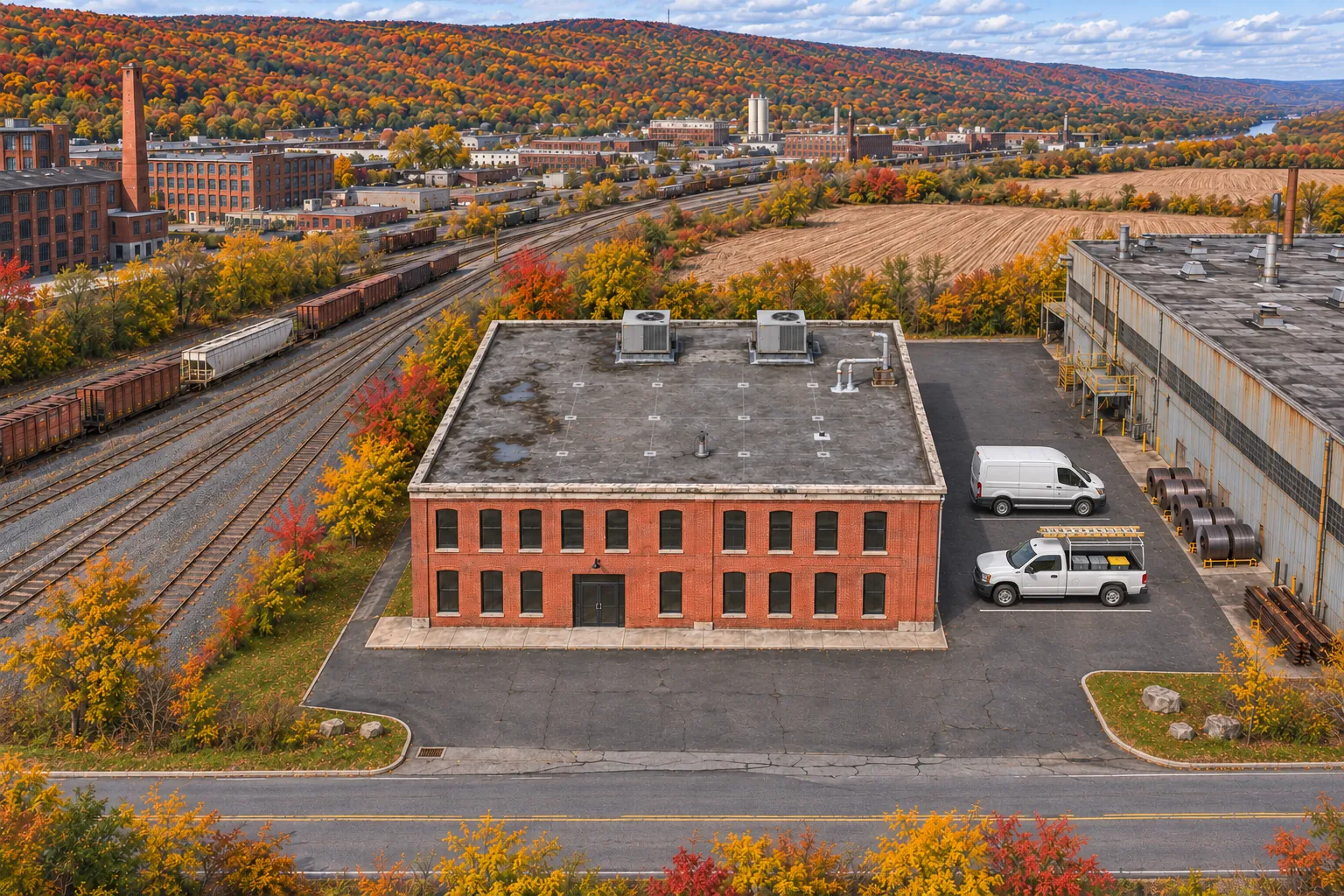
Collingdale commercial roof repair on warehouses comes down to one line: where the wet roofing ends and the dry roofing starts.
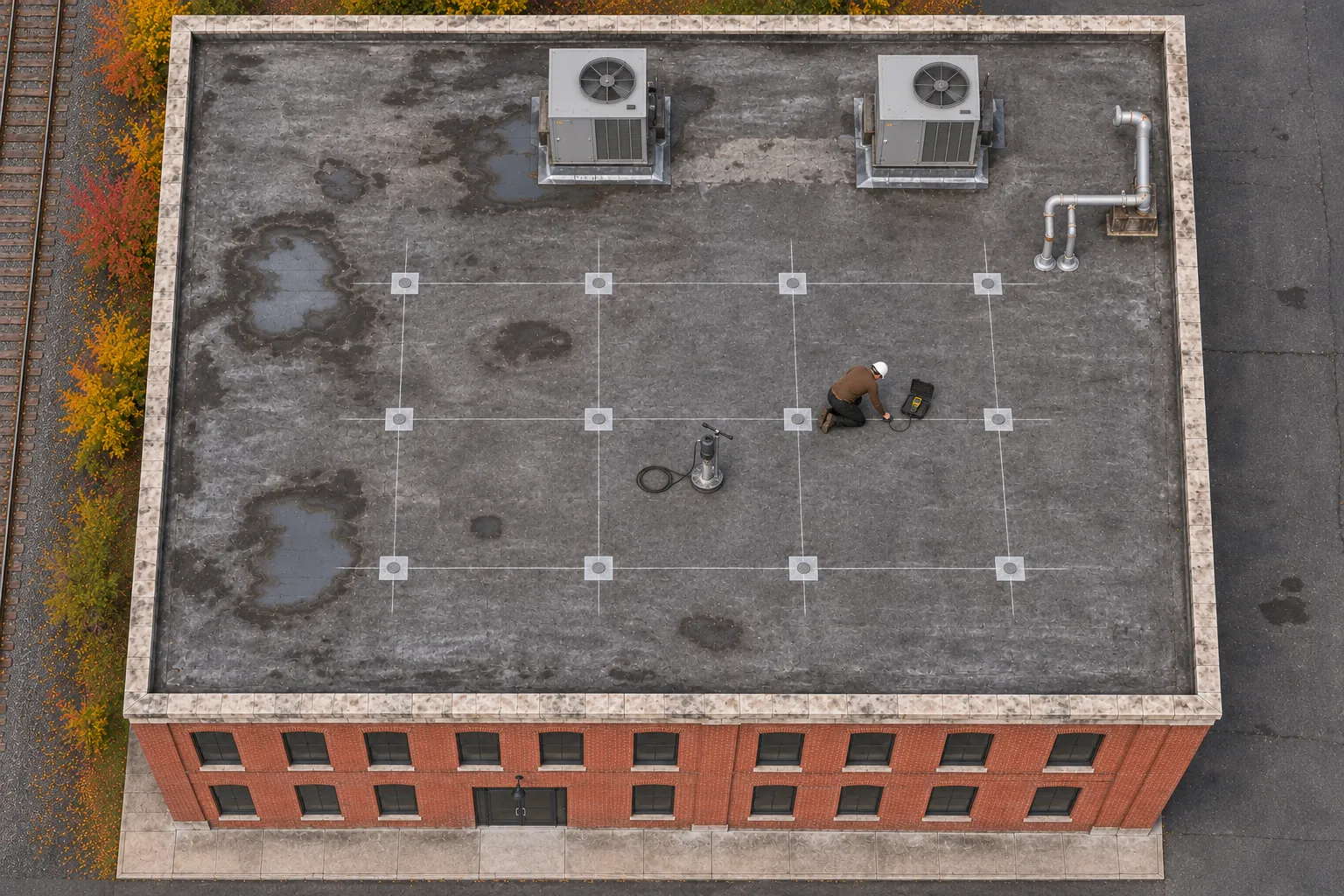
Keeping firm, dry roofing makes sense only when nothing wet is left beside the new work. Cores around the leak show where the insulation turns dry, and that line sets the tie-in.
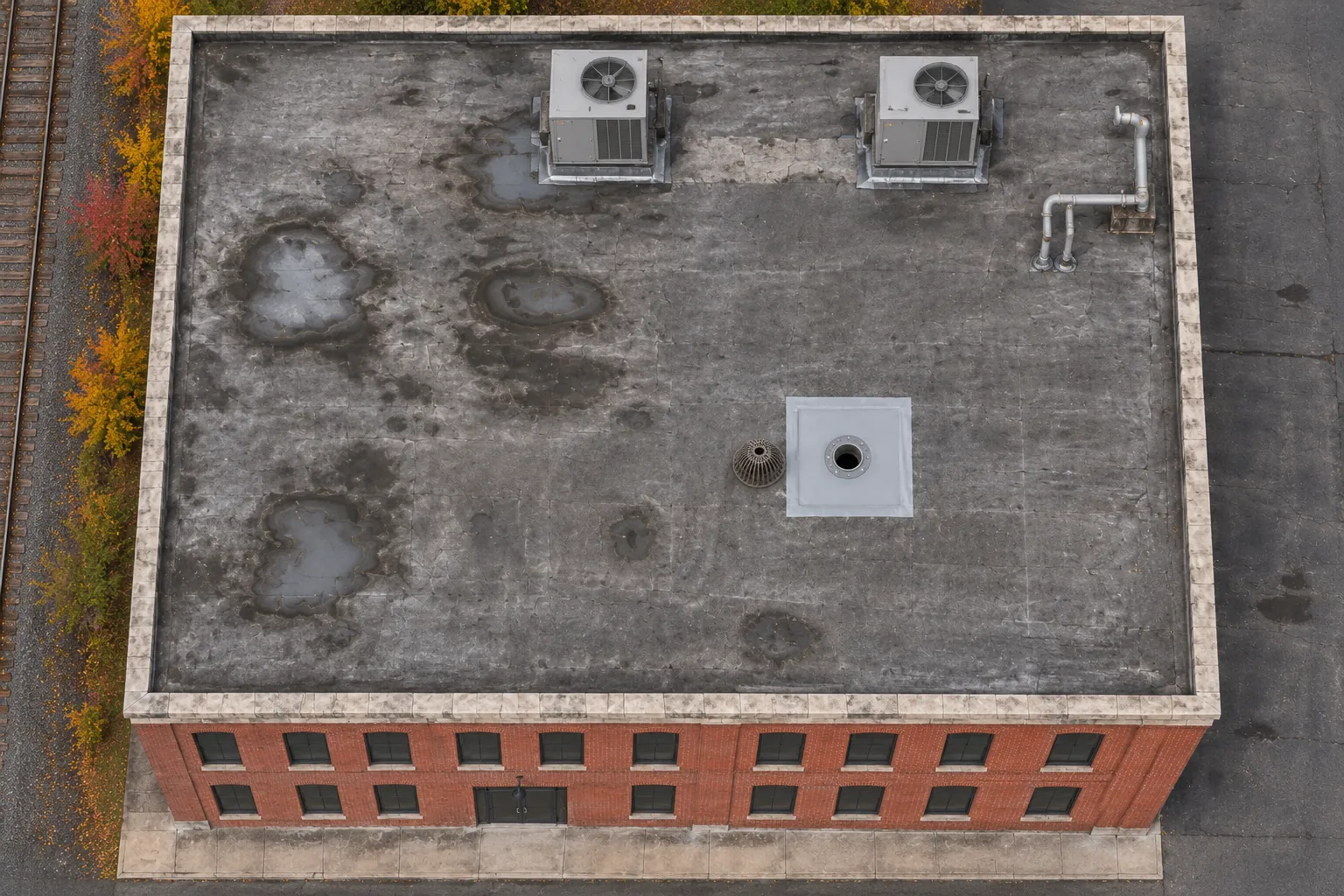
Rooftop equipment and drains near that edge change the plan. A tie-in that lands at a curb or outlet gets extended to a cleaner joint so the connection holds.
Warehouse roofs show these conditions before a repair is planned.
Soft membrane underfoot a few feet beyond the drip point.
Water spreads through insulation under intact membrane. Cores map the wet area before the repair edge is drawn.
The leak sits close to an outlet or sump.
A seam across a drain area holds water. The repair edge moves so the drain gets reflashed as one detail.
A rooftop unit or vent a few feet from the damage.
Ending new membrane at a curb leaves a weak joint. The curb is flashed into the repair instead.
Drips landing in a loading lane during rain.
Work zones above docks are set so trucks and forklifts keep moving while that roof area is repaired.
A row of earlier patches lining the edge of a past repair.
Repeated patching at one line means the old tie-in sat on wet board. Cores along that line show how far back the new edge should go.
A careful tie-in protects the roof you keep as much as the part you replace.
Firm roof around the leak keeps working, and the repair budget goes only to the area that failed. The repair edge is marked on a roof sketch, so later inspections can find it.
Cores confirm the edge is dry, so the new section sits beside firm material that will not start leaking next season. A cut line set on wet board starts leaking at the seam within a season or two.
Staging and protection are planned around delivery schedules and the lanes trucks use. Lanes under active roof work get overhead cover or a short, scheduled closure.
Moving the tie-in away from curbs and drains gives each joint flat, firm material to seal against. The seam then runs on a flat, clean field where welding or adhesive bonds fully.
Each method protects the dry roof next to the work.
A grid of small cores around the leak shows where wet insulation ends.
Wet board and membrane are cut back to dry edges, rebuilt, and seamed into the existing roof.
Nearby curbs get new flashing as part of the section so no seam ends against them.
Outlets near the repair are reflashed and their rings reset in the same work.
Overhead protection and timed staging keep loading lanes open under the roof work.
Call with the dock number and delivery schedule. We plan the roof work around the trucks.
Five steps from the first core to a closed-up section.
Dock schedules and forklift routes are noted so staging and any overhead work stay out of their way.
Cores in rings around the leak show where insulation is wet and where it turns dry.
The edge goes on dry, firm roof, moved away from curbs and drains wherever they would weaken it.
Wet material comes out, new insulation and membrane go in, and every new seam is probed.
The tie-in edges are photographed and marked so later checks can find them quickly.
Collingdale is one of five towns we serve with Reading; the other four are below. If your warehouse sits outside them, call us or send us a message.
Office roofs where parapets and masonry share the blame.
Metal equipment buildings with loose screws and open laps.
Drain leaks checked above the deck and below it.
Small facilities that log storms to confirm a roof fix.
What warehouse owners ask before a section repair.
Yes, when cores confirm firm, dry material and a reliable joint line. Equipment and drains near the edge can push the line outward, and concealed wet board is never left beside new work.
The size of the wet area drives it most, along with the membrane type, drains and curbs inside the section, and access over docks. The price follows the core results.
Collingdale is on our regular list. Call us with the warehouse address and the dock or bay where water shows.
We repair warehouse roofs in Collingdale and the nearby towns listed above, from single seams to full sections. Every job starts with an inspection and cores around the leak.
Rarely for long. Work zones over docks are timed with delivery gaps, and overhead protection keeps the lanes usable for most of the job.
Enough to find dry board on every side of the leak. Cores start near the drip and step outward in rings until each direction turns dry, and each hole is sealed before the crew leaves the roof.
Yes. While the crew is up for the repair, drains, curbs, and seams across the rest of the roof can be walked, and anything worth watching goes onto the same roof sketch with photos.
Send the warehouse address and where water lands. We core the area, set a dry tie-in line, and price the section.