Reading Commercial Roof Repair FAQ

Thirty Answers on Leaks, Drains, Metal Panels, and Plant Roofs

Our Reading commercial roof repair FAQ answers the questions building owners ask most, from first leaks and lease duties to drains, metal panels, and snowmelt.

  • 30 Answers
  • Seven Topics
  • Leak Tracing
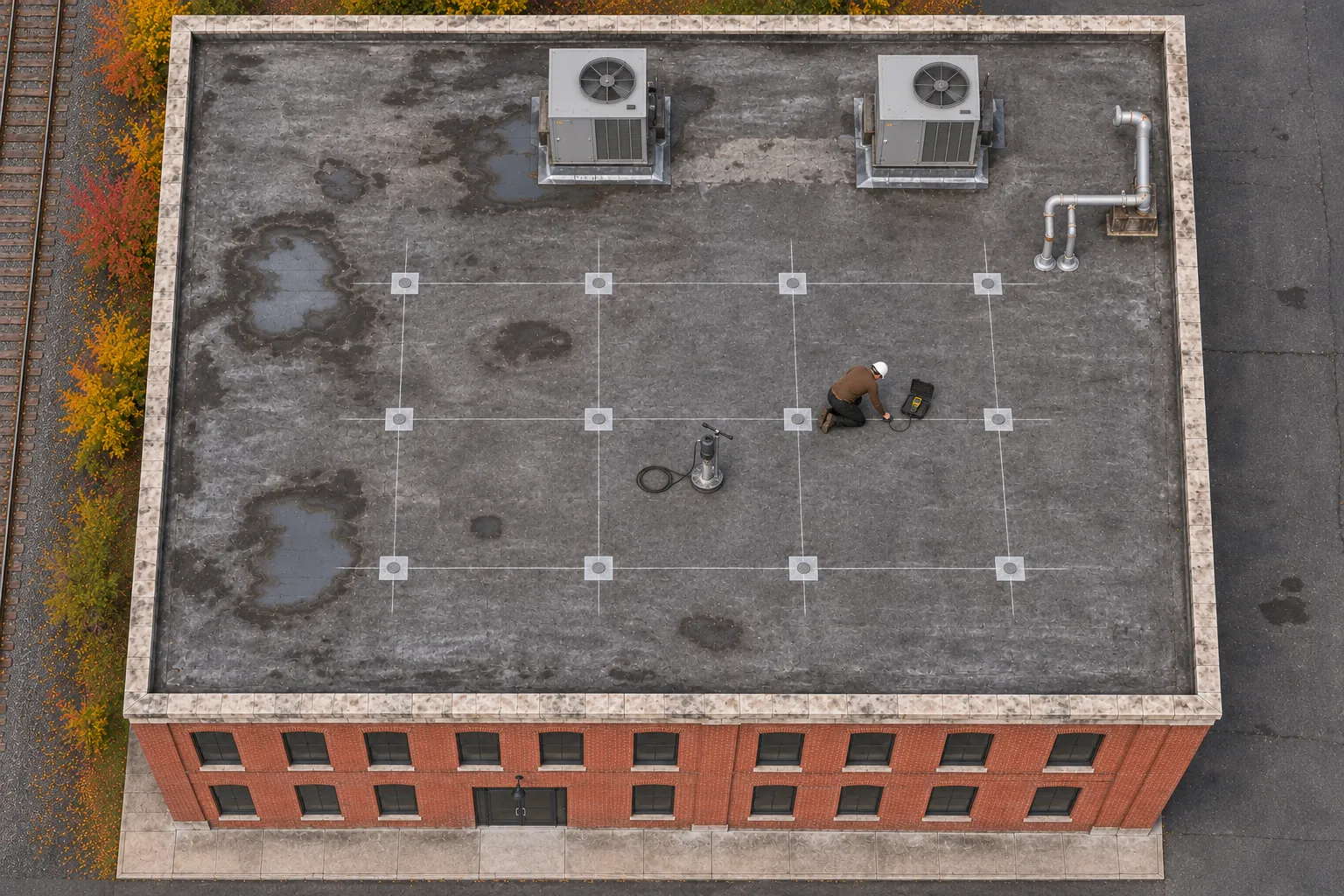
Top-down view of a marked core-cut grid on a flat roof with a roofer taking a core sample
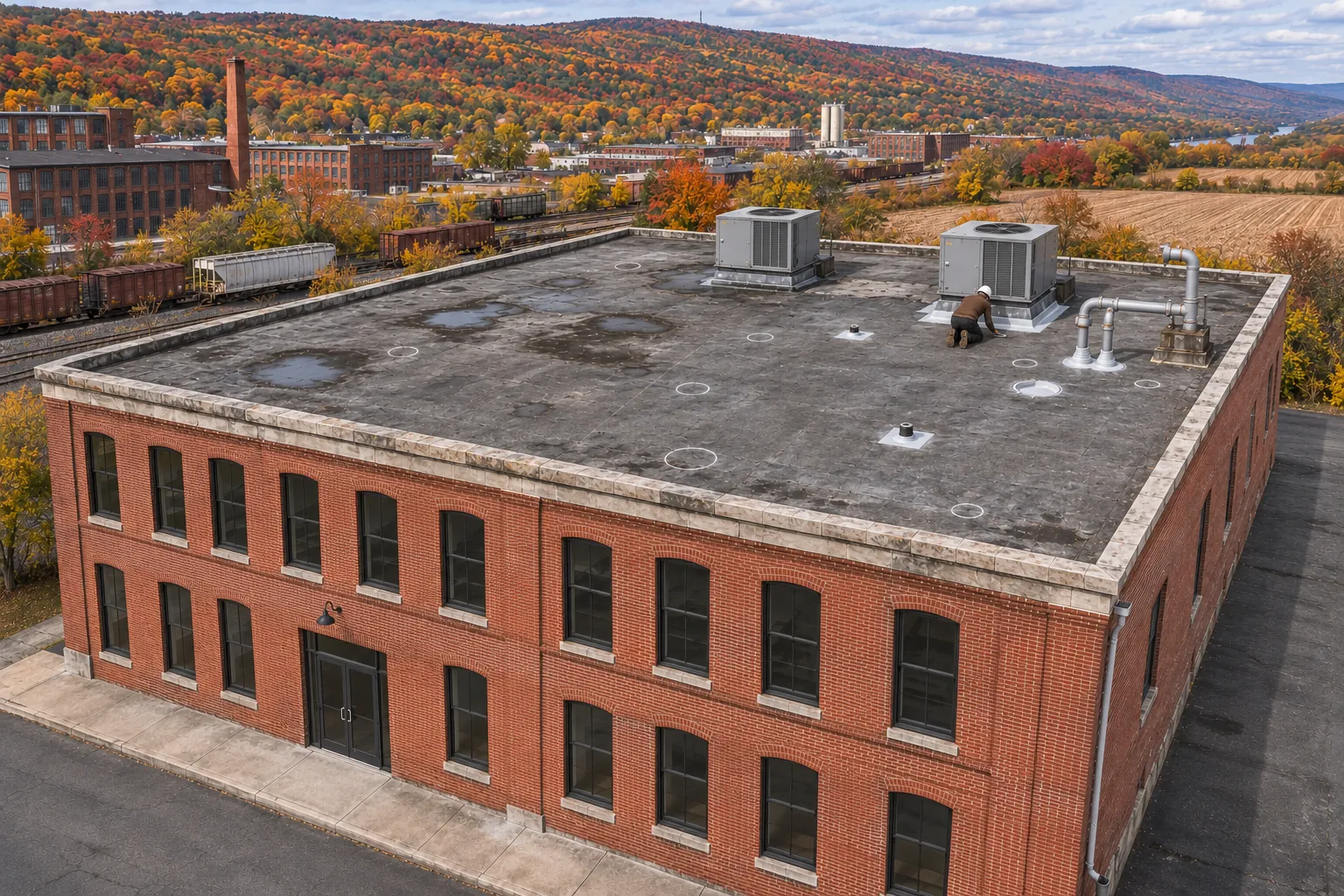
Roofer working at a rooftop unit on a brick building, with sealed points around the roof penetrations
All Questions

Reading Commercial Roof Repair FAQ by Topic

Every answer in this Reading commercial roof repair FAQ comes from how repairs get inspected, priced, and carried out on real commercial roofs. Jump to a topic below.

Questions

Commercial Roof Repair Decisions in Reading, PA

First leaks, repeat repairs, leases, and repair edges come up before most work starts.

How should a Reading business respond to a new roof leak?

A Reading, PA business should protect people and contents, record where water appears and arrange a roof investigation when access is safe. We need the leak’s timing and nearby equipment activity as well as its location. Those observations help separate the entry point from water traveling through the roof assembly.

Are recurring repairs a reason to replace a commercial roof?

Recurring repairs are a reason to reassess the roof, not an automatic instruction to replace everything. We look for patterns across the assembly, including wet insulation, unreliable seams and deteriorated support. The next step depends on whether firm boundaries remain for local work or failures have become too widespread.

Which lease provisions matter when a commercial roof needs repair?

Maintenance duties, repair obligations and notice procedures in the lease matter when deciding who handles commercial roofing work. We can explain the physical defect and access needed, but the parties should check the agreement before assigning responsibility. Protecting occupied areas and documenting ongoing leakage should be coordinated while authorization is clarified.

Can repairs stop at the edge of one wet roof section?

A sectional repair can stop where investigation establishes a firm, dry boundary fit for the new connection. We examine moisture beyond the visible leak and check adjoining seams or roof materials. A line drawn around interior staining can be too small if water has spread through insulation beneath otherwise intact roofing.

Questions

Flat Roof Puddles, Punctures, and Drains

Standing water and drain connections decide how a low-slope roof holds up between storms.

Why does water keep returning to the same flat-roof puddle?

A recurring puddle usually points to a drainage condition that surface patching has not changed. We check blocked outlets, drain elevations, insulation shape and possible movement in the deck. Any damaged roofing in that low area also needs attention, but repairing the surface alone leaves the runoff path unchanged.

Is an isolated puncture suitable for a flat roof patch?

An isolated puncture can take a patch when the surrounding membrane and materials beneath it remain in good condition. We identify the roof system and inspect for moisture before choosing compatible repair materials. If the damage extends into wet insulation or deteriorated decking, replacing a larger section can be necessary instead.

Does a leaking roof drain always need new flashing?

A leaking roof drain has a flashing fault only some of the time; the bowl, clamping connection or pipework can be responsible. We trace the leak before defining the roofing repair. Work below the drain can need a plumbing trade, especially where the connection runs over equipment or an occupied room.

What drives flat roof repair costs after a leak is found?

An on-roof inspection sets the repair price after the leak source and affected materials are assessed. We include the roof system, size and number of damaged areas, core cuts for wet insulation, flashing, drains and access. The scope must also distinguish a solid local repair from a section that needs replacement.

Questions

Metal Panels, Screws, and Laps

Fasteners that lose grip, rust at overlaps, and moving laps cause most metal roof leaks.

Can sealant fix a metal roof screw that no longer grips?

Sealant cannot restore the holding strength of a screw that no longer grips. We inspect the hole, surrounding panel and underlying support before selecting the right repair. The completed connection needs both secure attachment and compatible weather sealing, rather than another surface application over a fastener that continues to move.

When should rusted panels above a fabrication shop be replaced?

Rusted panels need replacement evaluation when metal loss, perforation or failed fixing points prevent a dependable repair. We examine the underside where accessible and check whether corrosion continues beneath overlaps. The replacement scope should address adjoining seams and supporting components so a new panel does not meet another unsound connection.

Why does a repaired metal lap sometimes open again?

A repaired lap can reopen if panel movement, poor engagement or defective attachment remains unresolved. We inspect the joint and previous materials before choosing another detail. The repair needs to suit the metal system’s movement rather than merely bridge the visible gap with a rigid patch or excess sealant.

Can a repaired commercial metal roof remain useful without full replacement?

A metal roof can remain useful after local repairs if the panels, supports and connections around them are serviceable. We consider corrosion, repeated leakage and maintenance access when judging that condition. Repairing selected defects establishes no promised lifespan, especially where deterioration continues beyond the areas already addressed.

Questions

Finding Leaks Above Racks and Rooftop Units

Water travels before it drips, so tracing it takes records, timing, and the right trades.

What helps locate a warehouse leak hidden above storage racks?

A roof plan, interior leak locations and the timing of water entry help trace a leak above storage racks. We compare those records with seams, drains and equipment penetrations, then investigate likely routes. Water can travel before dripping, so difficult interior access should not turn the nearest visible stain into an assumed entry point.

Should an HVAC technician join a leak investigation near a rooftop unit?

An HVAC technician should be involved when equipment or condensate drainage could be contributing to water near a rooftop unit. We examine roof flashing and penetrations while those mechanical sources are checked. Comparing leaks with rainfall and operating cycles helps avoid repairing roofing that is not responsible for the moisture.

Can hidden moisture make a small roof leak expensive to repair?

Hidden moisture can enlarge the work needed behind a small visible leak. We set the price through an on-roof inspection covering leak tracing, roof system, damaged area sizes and number, core cuts for wet insulation, flashing, drains and access. Those findings determine whether localized work or replacement of the affected section is appropriate.

Is the landlord always responsible for a commercial tenant’s roof leak?

A landlord’s responsibility for a commercial roof leak depends on the lease terms rather than ownership alone. We document the roofing defect and the proposed access or repair work so the parties can review their obligations. Notice, maintenance and authorization provisions should be checked before either side assumes responsibility for the scope.

Your Question Not Covered Here?

Call and describe what the roof is doing. A short conversation often tells us which part of the roof to check first.

Call Us(717) 955-7282
Questions

Plant Roofs, Exhaust Fans, and Production Access

Exhaust, equipment, and production schedules shape how plant roof repairs are planned.

Could exhaust deposits affect repairs around a bakery’s roof fan?

Exhaust deposits can affect preparation and material compatibility around a bakery’s roof fan. We inspect the contaminated area, curb connections and any movement caused by the equipment. The repair can need coordination with fan servicing so new roofing is not exposed to the same unresolved discharge or vibration problem.

What maintenance belongs after an industrial roof section is repaired?

A repaired industrial section needs drainage checks and inspections for damage from weather or service traffic. We examine the new connections alongside the surrounding roof rather than treating the repaired area as independent. Records of equipment visits and later leaks help identify whether a developing defect is new or related to the earlier work.

Should an industrial roof inspection include areas beyond the reported leak?

An industrial inspection should extend beyond the reported drip to identify related defects and moisture spread. We review seams, outlets and equipment connections near the likely entry route, then define where closer testing is needed. Limiting the investigation to a ceiling stain can overlook the conditions controlling the repair boundary.

How does production access affect industrial roof repair pricing?

Production access can affect staging, protection and the sequence of industrial repairs. An on-roof inspection establishes the price after we evaluate leak tracing, system type, damaged area sizes and number, wet insulation through core cuts, flashing and drain work. Access constraints also belong in the comparison between repairing the defect and replacing a section.

Questions

Snowmelt, Hail, Humidity, Bakeries, and Code Review

Winter melt, summer storms, damp brick, food plants, and permit questions in Reading.

Why might snowmelt reach a roof seam that stayed dry during rain?

Snowmelt can be held against a seam by ice at drains or gutters, exposing a different water path from ordinary rain. We inspect those details after safe access returns. Freeze-thaw movement can worsen existing weaknesses, and heavy wet snow raises loading questions that need qualified review beyond the leak repair itself.

Do summer hail marks prove a roof needs replacement?

Hail marks alone do not establish a need for replacement. We inspect for punctures, split seams and impaired flashing, while distinguishing storm damage from older roof conditions. Summer wind can also loosen perimeter details. Any insurance decision depends on the policy and the damage cause rather than the roofing assessment alone.

Could humidity explain water inside a Reading brick mill?

Humidity can contribute to condensation inside a Reading, PA brick mill, including beneath metal roofing or within damp insulation. We compare the moisture pattern with rainfall and building operations before choosing a repair. Wall joints and roof flashing need examination too, because neither condensation nor masonry leakage is resolved by an unrelated roof patch.

How can repairs protect operations in a snack food bakery?

Bakery roof repairs need a plan for protecting ingredients, equipment and occupied work areas beneath the opening. We coordinate access, debris control and any temporary isolation with the operator. The repair method and weather determine what can remain in use; a localized defect does not always mean the space below can stay unrestricted.

What should a Reading roof repair scope include for code review?

A Reading, PA repair scope should identify the covering involved, the proposed openings and any damaged supporting material. Pennsylvania’s UCC is the statewide code framework. We would take those specifics to the reviewing authority rather than assume a repair category from the interior leak’s size or the owner’s initial description.

Questions

Questions From Our Five Nearby Towns

Wyomissing, Collingdale, Downingtown, Brookhaven, and Ridley Park each bring a roof question of their own.

Does a Wyomissing office leak need roofing or wall repairs?

A Wyomissing office leak needs its entry path traced before roofing or wall work is selected. We examine the relationship between stains, parapet flashing and masonry above the roof. Water entering a wall can appear at ceiling level, so patching the horizontal membrane can leave that separate source untouched.

Can a Collingdale warehouse repair preserve the surrounding dry roof?

A Collingdale warehouse repair can preserve surrounding roofing when inspection confirms firm material and a reliable connection boundary. We check moisture beyond the affected area and identify equipment or drainage that complicates the tie-in. Keeping solid roofing makes sense only if concealed damage is not left immediately beside the new work.

Why investigate loose fasteners on a leaking Downingtown equipment building?

Loose fasteners can let water enter and allow further panel movement on a Downingtown equipment building. We check screw grip, washer condition and the metal around each suspect fixing. The repair needs to restore the connection, while nearby laps and flashing are inspected for other defects contributing to the same leak.

What should be checked beneath a Brookhaven roof drain leak?

A Brookhaven drain leak needs the underside connection and nearby materials checked where access is available. We look for pipe leakage and moisture spreading through insulation, as well as defects at the roofing attachment above. Coordinating that investigation can prevent a new surface patch from hiding a problem below the drain bowl.

How can a Ridley Park facility track whether roof repairs are working?

A Ridley Park facility can track repairs by recording subsequent rain events, interior moisture and changes at the repaired details. We compare those observations with the original leak map and photographs. A dry ceiling during light rain is useful information, but performance through relevant weather conditions gives a clearer picture of the repair.

Questions Left After the Reading Commercial Roof Repair FAQ?

Still deciding what the roof needs? Call with your question or book an inspection, and get answers about your own roof.

Call Us (717) 955-7282