Most Plant Repairs
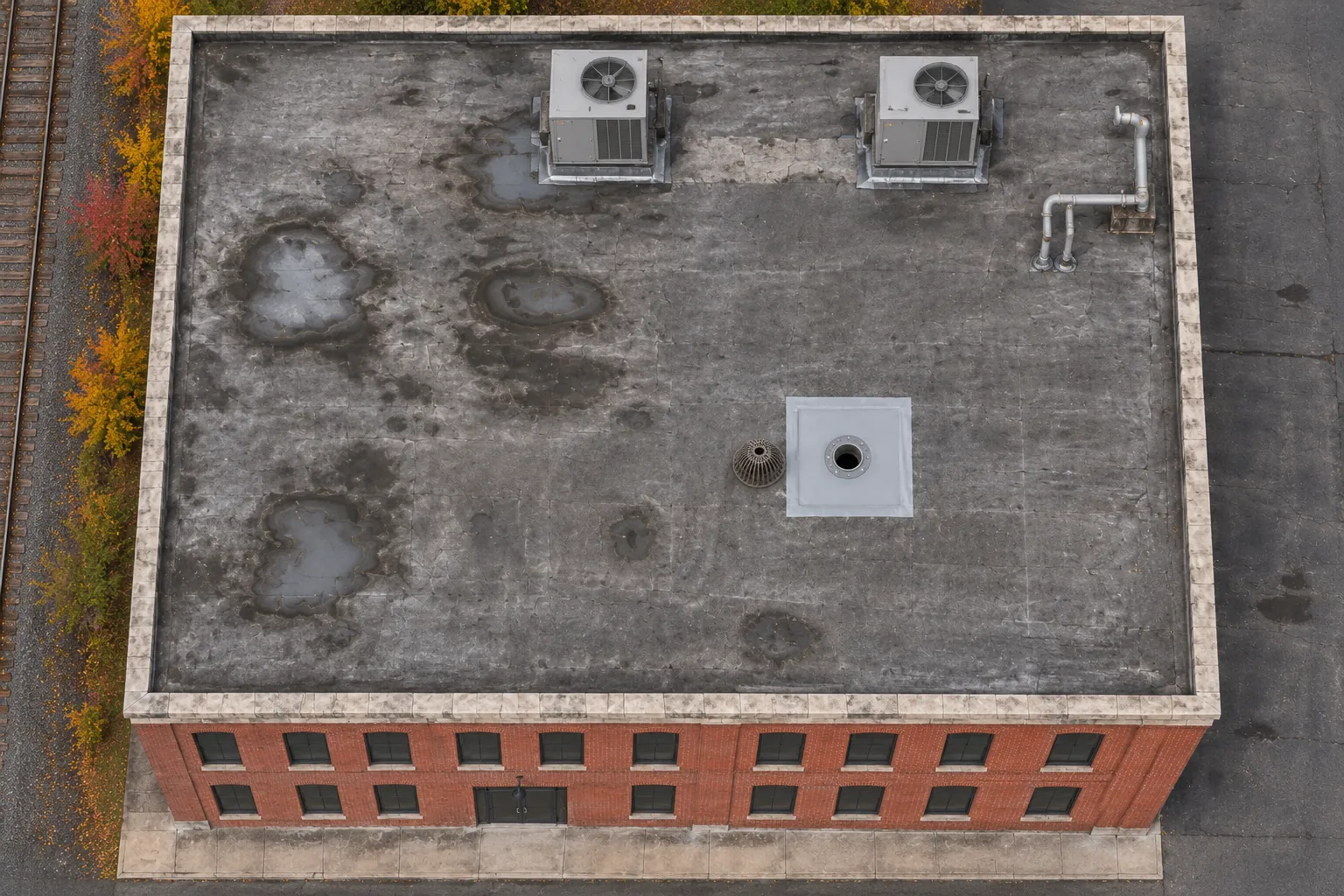
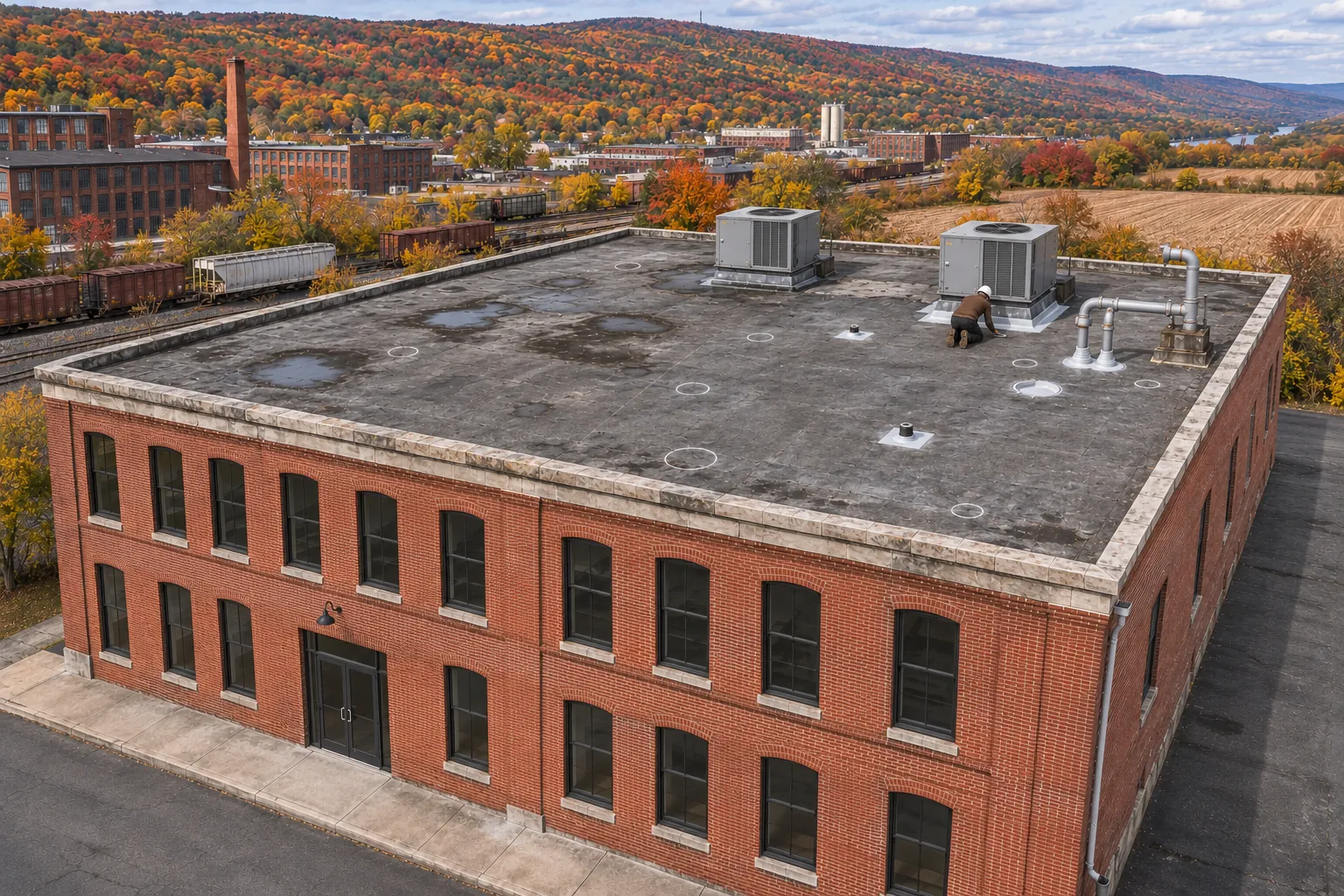
Repair Beside Running Equipment
- Equipment Status
- Fans keep running, guarded off
- Roof Area
- Away from hot exhaust
- Coordination
- Work zone marked, staff told
- Repair Scope
- Membrane and flashing repairs

As a Reading industrial roof repair contractor, we fix fan curbs, stack flashing, residue-worn membrane, and equipment damage on plant roofs, staged around production.
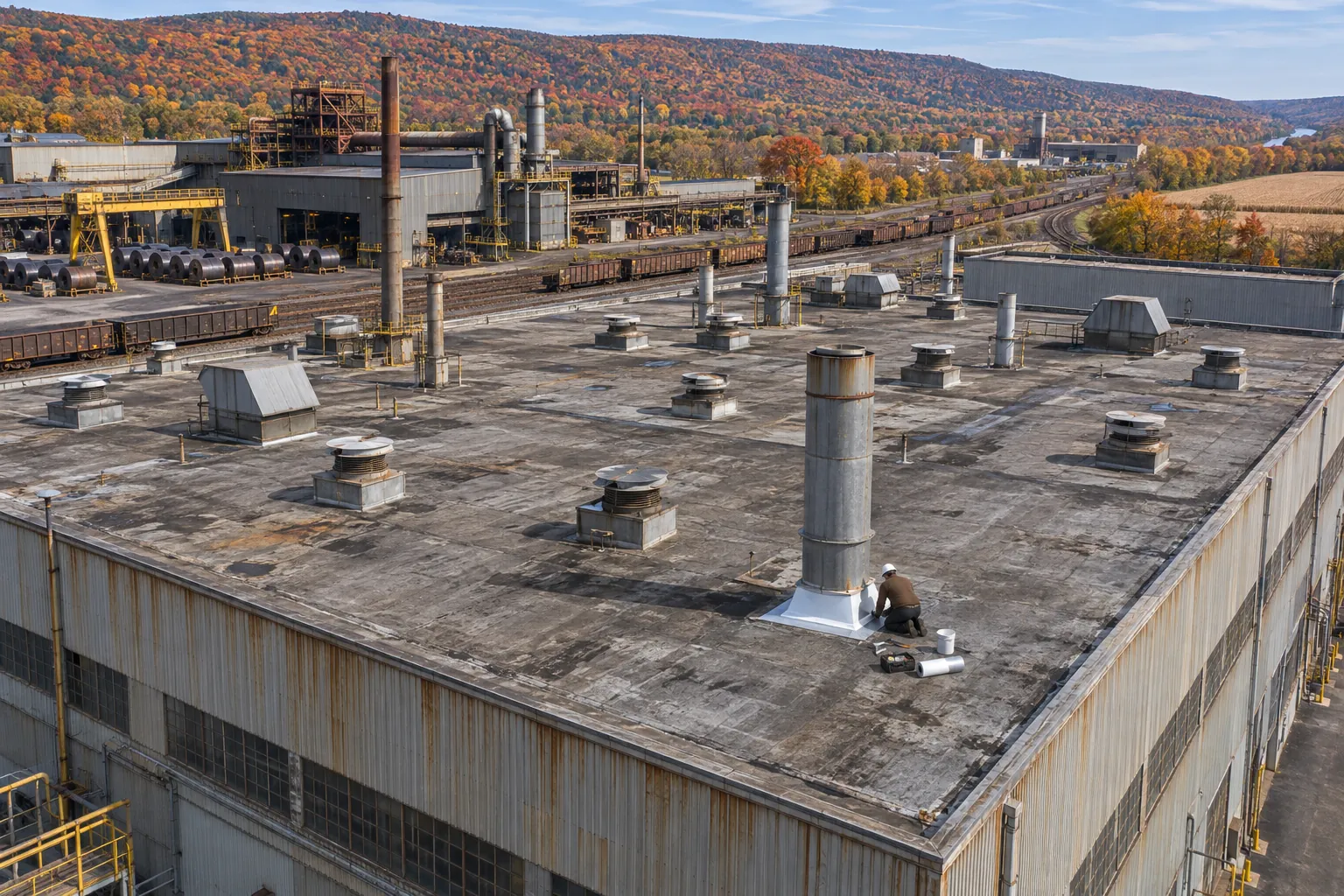
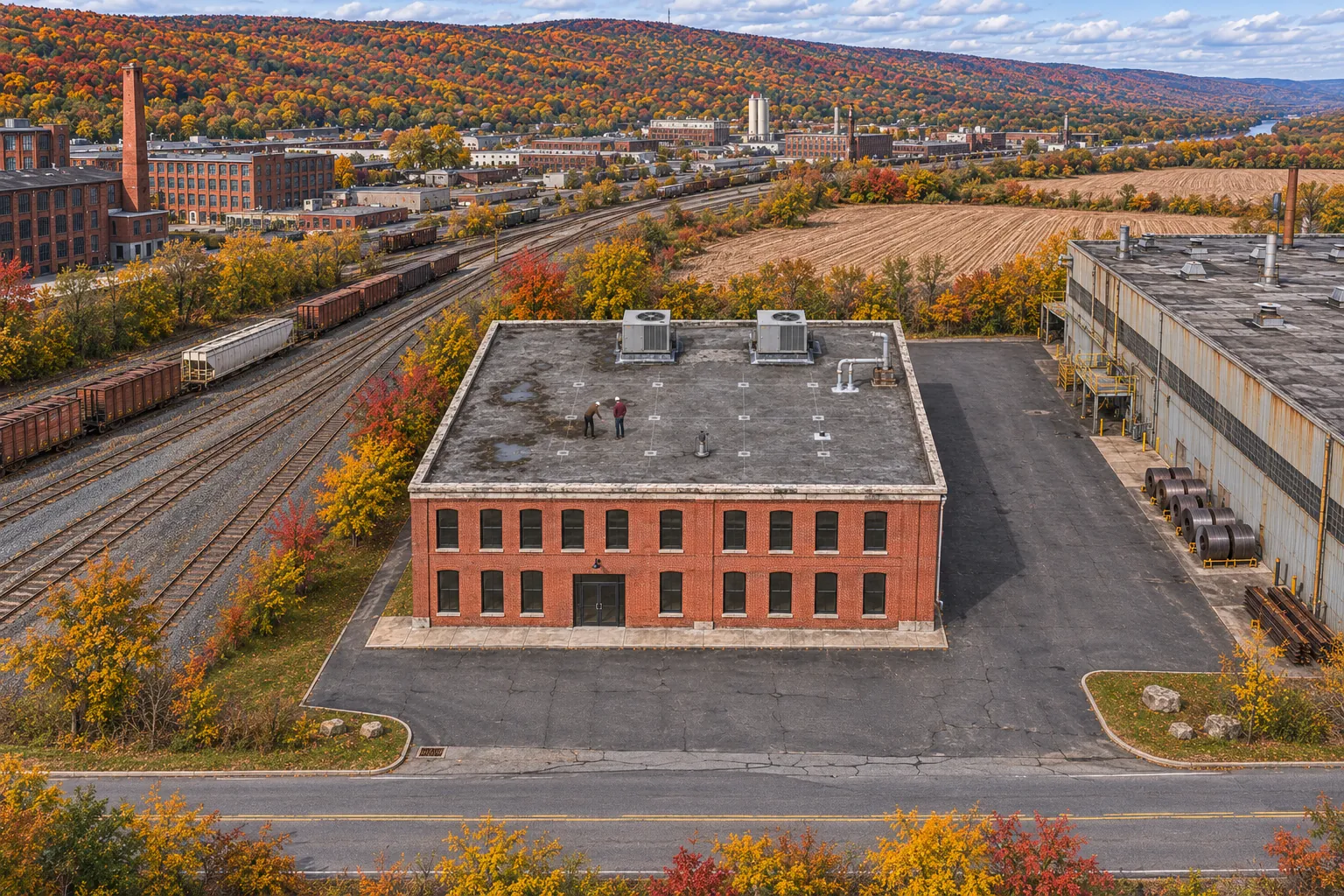
Reading industrial roof repair has to fit the plant. These three paths show how equipment shapes the work.
Plant roofs carry loads and exhaust that ordinary roofs never see. These are the conditions behind most industrial calls.
A greasy or crusted ring on the roof around a bakery or process fan.
Exhaust deposits soften some membranes and block adhesion. Cleaning, a compatible material, and fixing the discharge come first.
Hairline splits at curb corners and loose counterflashing.
Equipment vibration works flashing loose over time. New flashing and secure counterflashing hold up better once the vibration source is checked.
Water at the base of a stack or process pipe after rain.
Heat and movement break down boots and collars. New flashing suited to the temperature goes in at the base.
Scuffed, thinned membrane along the routes techs walk.
Repeated foot traffic wears through the top layer. Repairs plus walkway pads protect those paths afterward.
One drip reported, with more weak spots nearby.
An industrial roof inspection covers seams, outlets, and connections near the entry route, so related defects get found in one visit.
Methods chosen for heat, residue, vibration, and the need to keep lines running.
Curb flashing is replaced and counterflashing re-fastened, timed with fan servicing so the curb can be fully exposed.
Contaminated membrane is cleaned or cut out, and repair materials are picked to resist what the exhaust carries.
High-temperature boots and collars replace failed flashing at stacks and process pipes.
Pads along tech paths protect repaired membrane from the traffic that wore it down.
Wet board near equipment is removed and replaced in stages, so production areas stay covered.
A plant roof repair is judged by what happens on the floor below it.
Closing leaks at curbs and stacks keeps water off lines, ingredients, and finished goods below the equipment.
Fixing residue and vibration causes alongside the flashing means the new work faces fewer of the forces that broke the old.
Walkway pads and a marked roof sketch make later inspections quick and keep service traffic off weak spots.
Staging repairs around shutdowns and shift changes keeps the plant running while the roof gets fixed.
Call with the line schedule and the next planned shutdown. We plan the repair around both.
Five steps that fit roof repair into a working plant.
Shift times, shutdown windows, and safety rules for the roof are agreed before work starts.
Seams, outlets, curbs, stacks, and paths near the reported drip are checked, with closer testing where moisture is suspected.
Residue and equipment movement are noted, and fan servicing is coordinated so new roofing faces fewer of the same forces.
Curbs, stacks, membrane, and wet board are repaired in planned stages, with areas below protected as needed.
Drain checks, inspections after storms and equipment visits, and a roof sketch keep later problems small.
Plant roofs mix flat membrane, metal sections, and stubborn leaks.
Large flat plant roofs pond around drains and equipment, so drain and membrane repairs often follow industrial work.
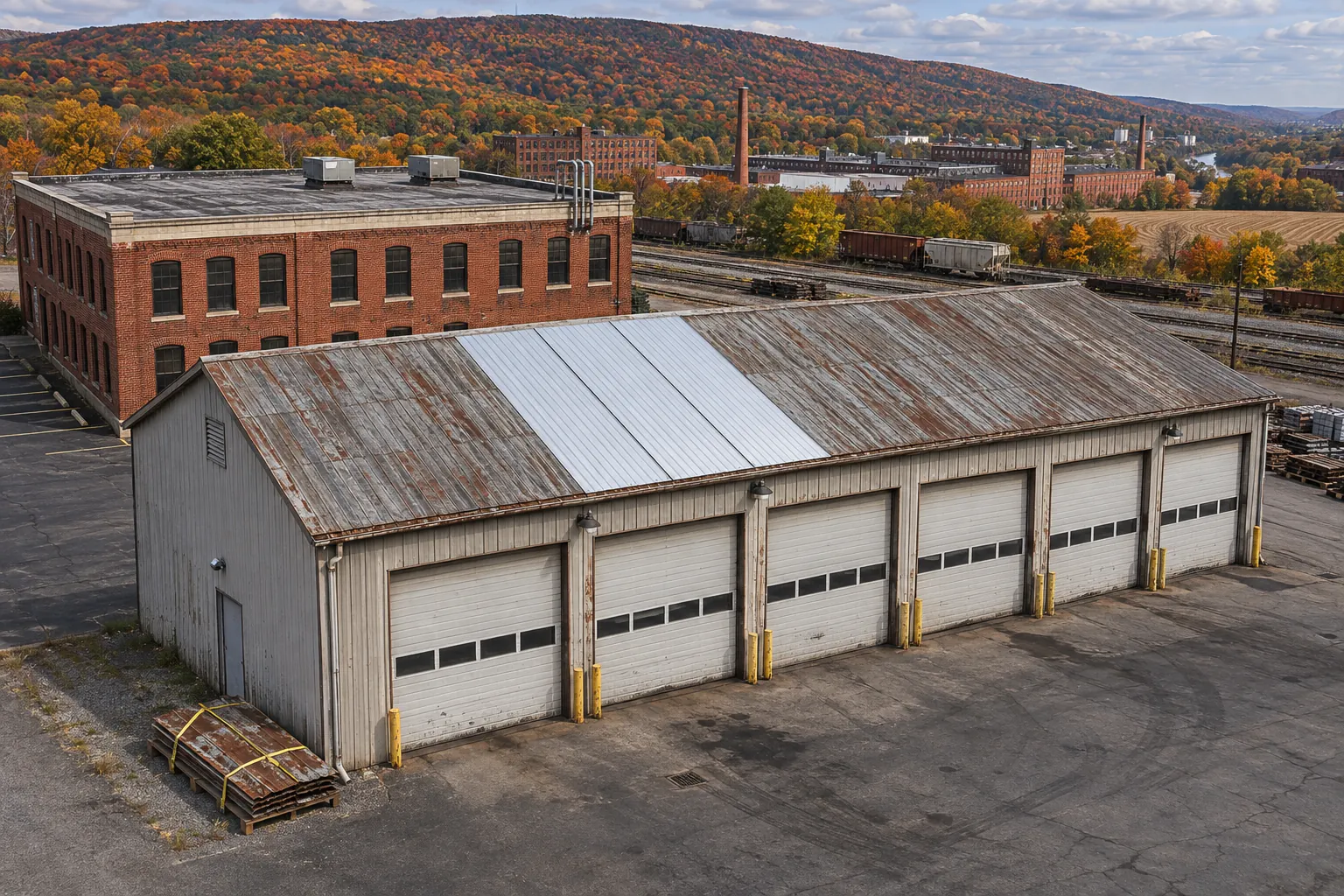
Process buildings with metal roofs need fastener and lap repairs where vibration and heat move the panels.
Drips over lines that move with weather or fan cycles call for a full trace before any repair is chosen.
Plant managers ask these before a roof repair is scheduled.
The inspection covers leak tracing, system type, the size and number of damaged areas, cores for wet insulation, and flashing and drain work. Production access, staging, and shutdown timing also shape the price and the repair plan.
Drain checks, inspections after storms and service visits, and records of equipment work near the repair. Those records show whether a later defect is new or tied to the earlier work.
Wider than the drip. Seams, outlets, and equipment connections near the likely entry route get checked, then closer testing goes where moisture is suspected.
Many can. Membrane repairs away from hot exhaust go ahead with the area marked off. Work at the curb or stack itself is timed with a short shutdown or fan service.
It can. Grease and residue around fans soften some membranes and keep new material from bonding, so cleaning, a compatible repair, and a look at the discharge come before the patch.
Share the line schedule and where water shows. We inspect, plan around production, and repair the curbs, stacks, and membrane.