Most Common Pattern
Every Heavy Rain
- When It Leaks
- During or right after storms
- Where It Shows
- Near a seam, drain, or curb line
- Likely Source
- Open seam or failed flashing
- First Check
- Seams and flashing upslope of the drip

As a Reading commercial roof leak repair contractor, we trace drips back to the seam, drain, curb, or wall where water enters, then fix that source.
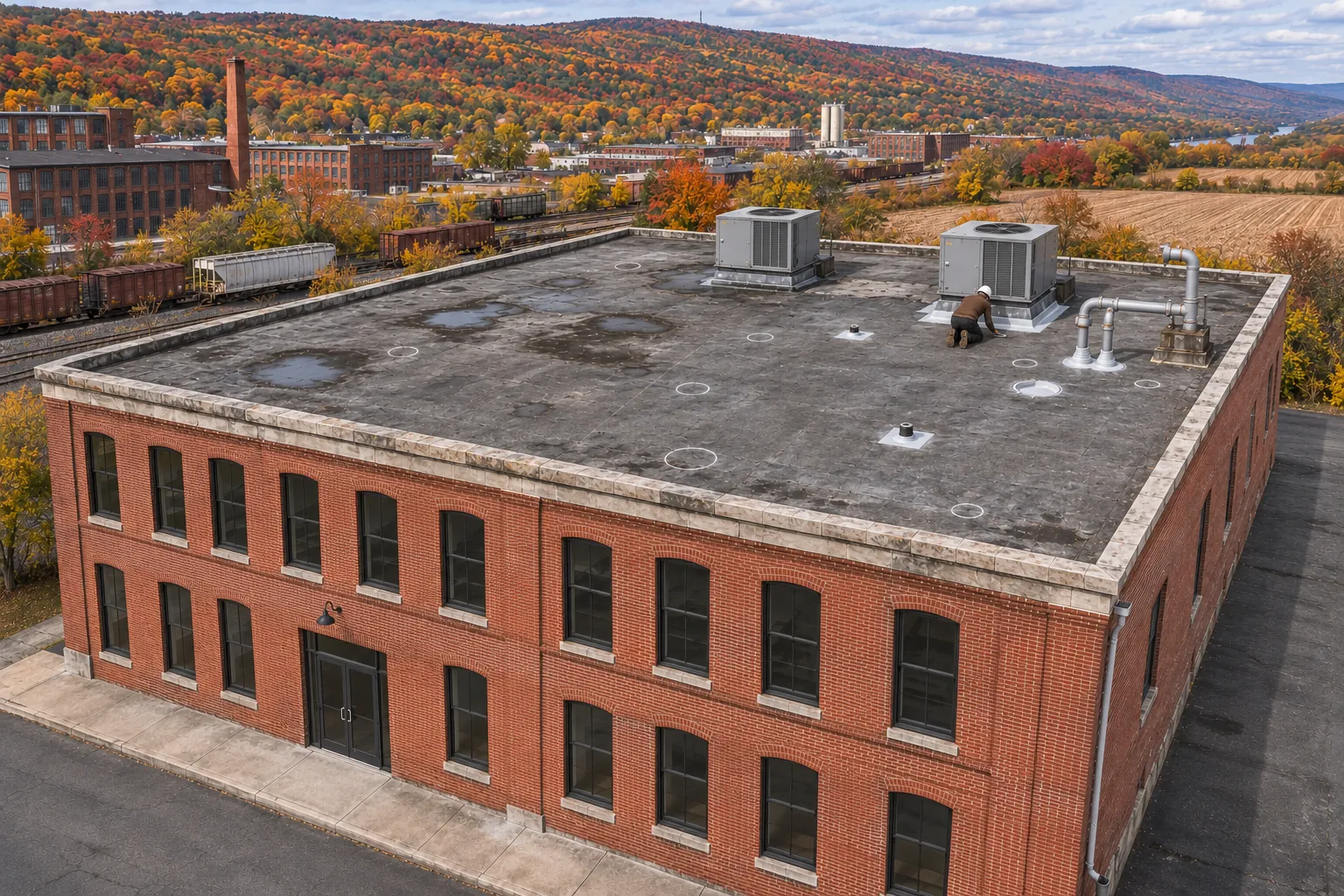
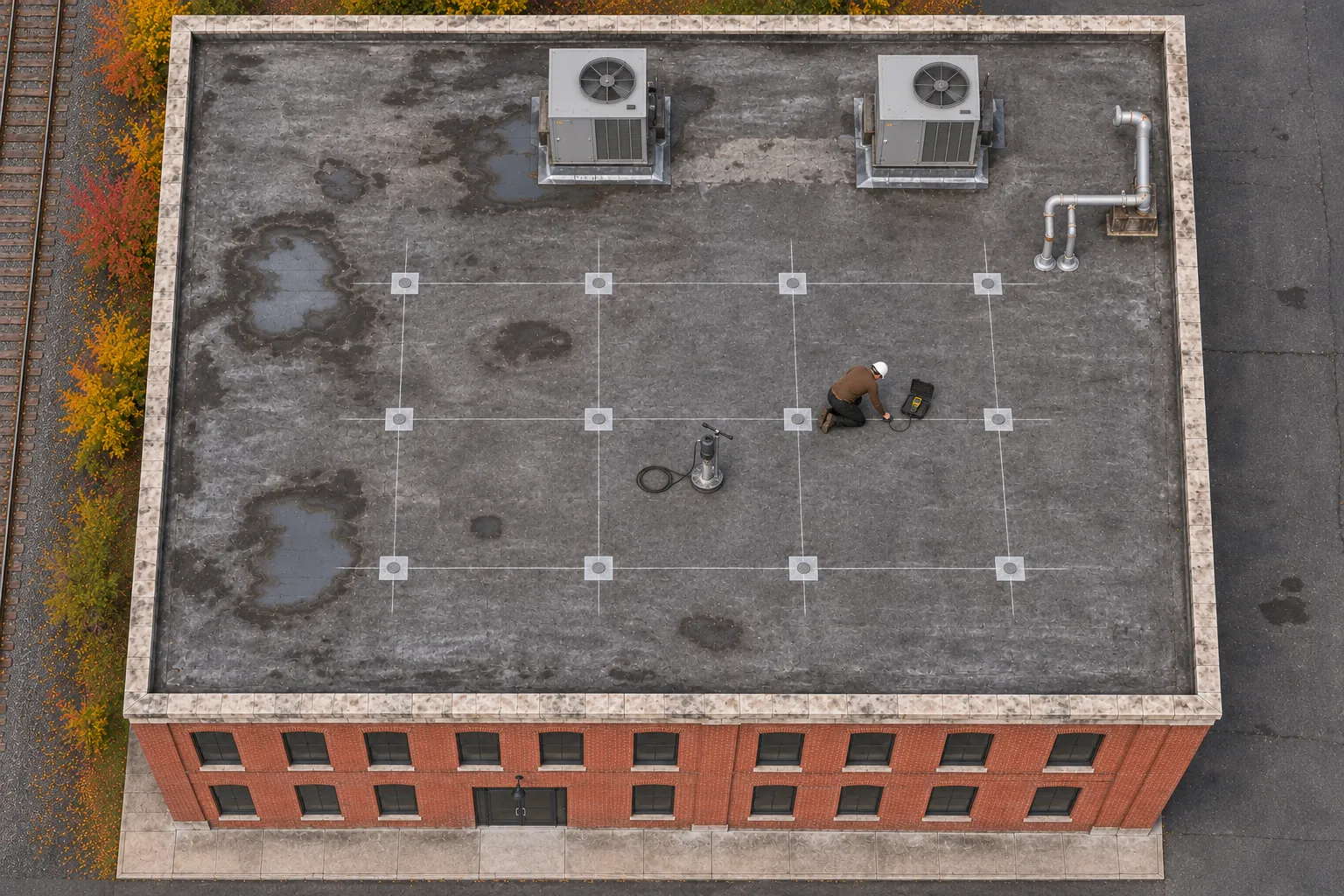
Reading commercial roof leak repair starts by reading the pattern. When and where water appears points to the source.
These are the leaks that send owners looking for a trace instead of a quick patch.
Drips onto top racks where nobody can reach the ceiling.
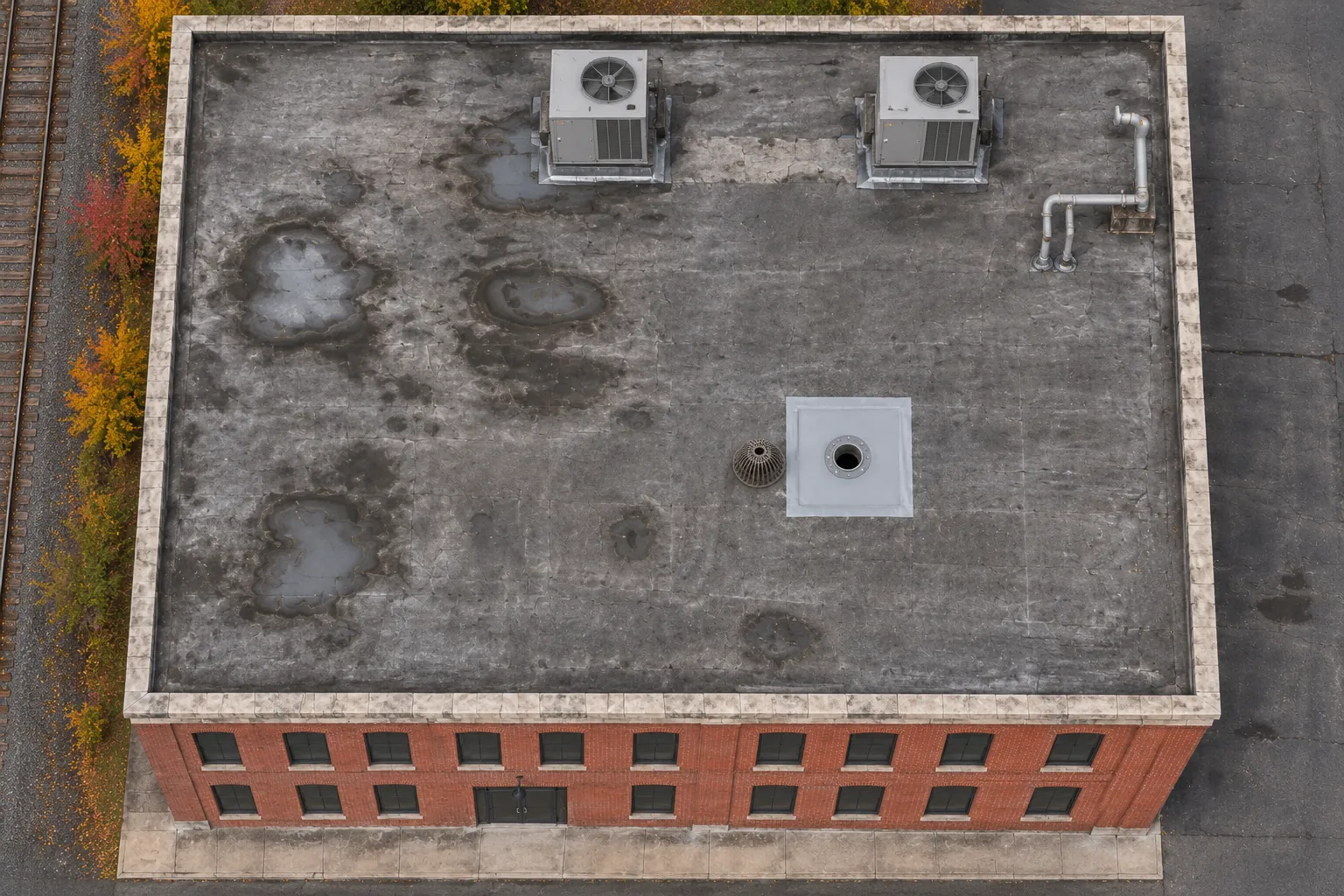
A roof plan, marked drip spots, and leak timing get compared with seams, drains, and curbs above. The nearest stain only starts the search.
Water below the unit, heavier on hot days when cooling runs.
Curb flashing, a cracked panel on the unit, or a blocked condensate line can each be the source. Roofing and HVAC checks happen together.
A stain that appears yards from any roof detail.
Water runs along the deck or through insulation before it falls. Cores and probing follow the path back uphill.
Damp plaster high on an exterior wall, worst in wind-driven rain.
Parapet caps, wall flashing, and mortar joints let water into the wall, and it shows at ceiling level like a roof leak.
Drips the week snow melts, dry the rest of the year.
Ice at the drain or gutter backs meltwater onto a seam. Clearing the outlet and sealing that seam stops the winter leak.
Leak tracing uses simple tools in a set order, so each suspect gets ruled in or out.
Dates, weather, drip spots, and equipment activity go onto a roof plan, so patterns show before anyone climbs up.
Seams, laps, drains, and curbs above the drip are checked in order, moving upslope from where water lands.
Small cores show wet insulation and how far it runs, which sets the repair size.
Where needed, one detail at a time gets wetted while someone watches below, so the source is confirmed before repair.
HVAC techs check units and condensate; plumbers check pipe below drains; masonry questions go to the wall trade.
Finding the true entry point costs less than patching the wrong seam three times.
Confirming the source before work starts means the fix lands on the right seam, curb, or drain the first time.
A traced leak gets closed at the roof, so racks, machines, and finished goods stop getting wet with each storm.
Cores taken during the trace show wet board while it is still a small area, which keeps the repair small.
A documented source and repair helps owners and tenants check maintenance and repair duties in their agreement.
Start a quick log: date, weather, and where it dripped. Call and walk us through it; the pattern points to where we start.
Five steps from the first drip to a confirmed, repaired source.
Each drip spot is marked on a simple roof plan along with the date, the weather, and what equipment was running.
Starting above the drips, seams, drains, curbs, and walls are checked in order, moving toward higher ground.
HVAC or plumbing checks run alongside the roof work when equipment or piping could be feeding the water.
The opening is repaired with materials matched to the roof, and wet insulation found in cores is replaced.
You track the old drip spots through rain or melt, and the log shows whether the repair is holding.
Once the source is found, the fix belongs to one of these services.
Most traced leaks end at a flat roof seam, puncture, or drain, repaired with membrane matched to the roof.
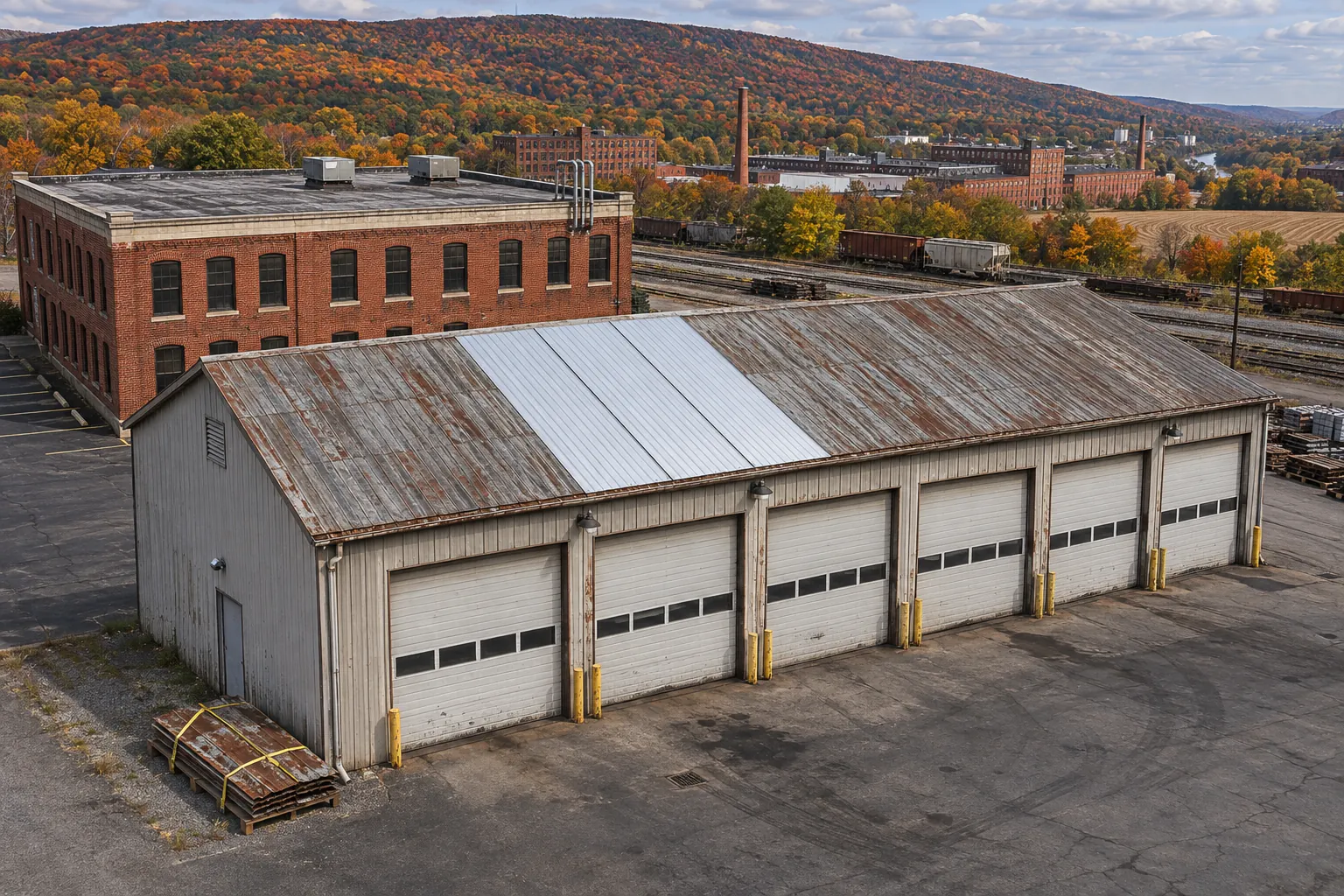
Traced to a screw line or lap, the repair restores fastener grip and lap seals on the metal panels.
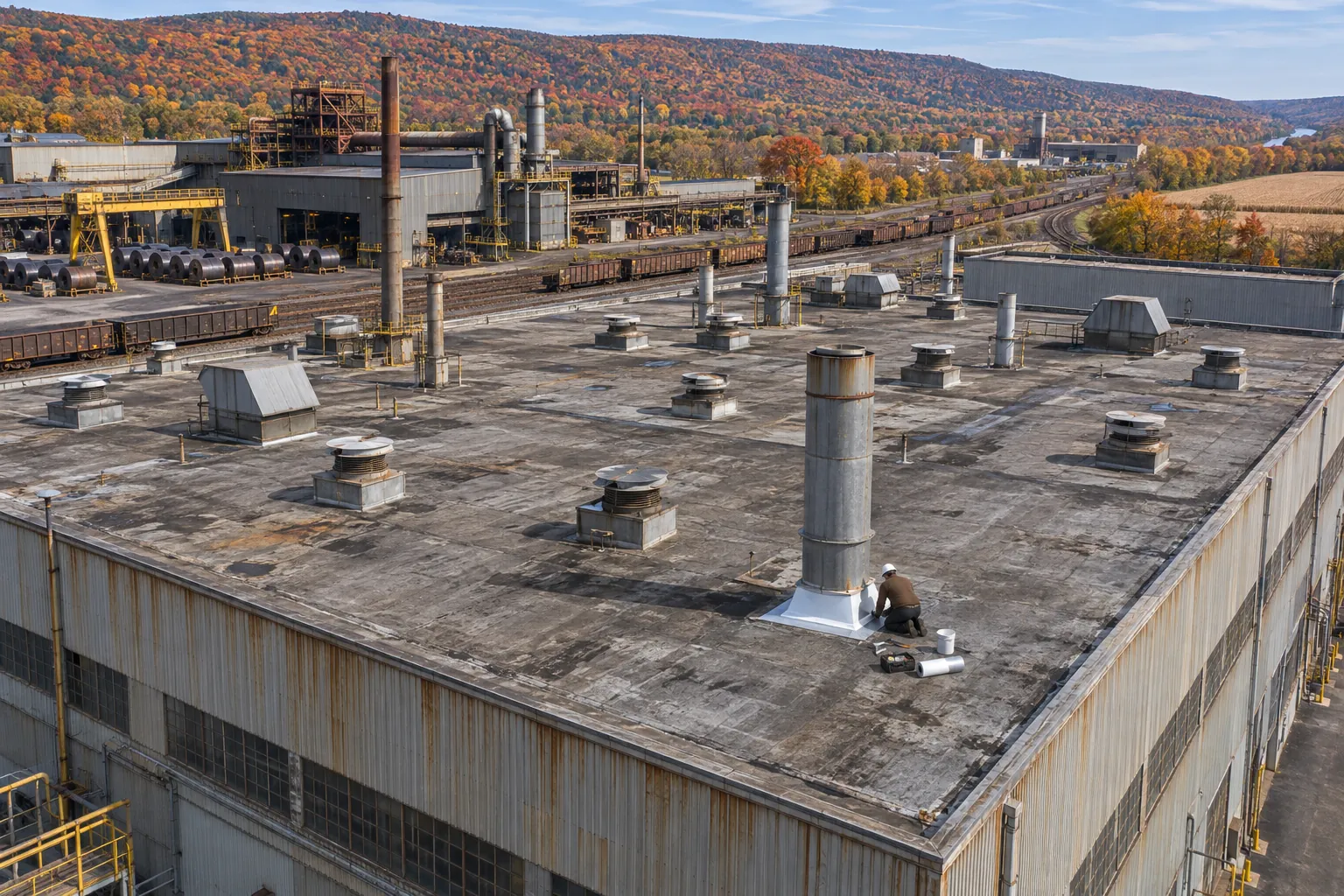
When the trace ends at a fan curb or stack, the repair is planned around the equipment and production.
What owners and tenants ask once water shows up inside.
Hidden moisture moves the price most. The inspection covers leak tracing, the roof system, the size and number of damaged areas, cores for wet insulation, flashing, drains, and access, and those findings set the cost.
That comes down to the lease, rather than who owns the building. Notice, maintenance, and authorization terms decide who orders the work. We document the defect and the access needed so both sides can check their obligations.
When water appears near a rooftop unit, yes. Condensate lines and unit housings leak too, and checking them with the roof flashing avoids repairing roofing that was never the source.
Water runs along deck flutes and through insulation before it drips. The stain marks where it fell, while the entry point sits upslope, sometimes many feet away.
Any leak means an opening somewhere. Heavy rain finds small gaps faster, so a roof that leaks only in downpours still has a seam, flashing, or drain that needs repair.
Tell us where and when it drips. We trace the water to its source, fix it, and help you watch it through the next storms.