Where Most Flat Roofs Start
Patch or Detail Repair
- Membrane Condition
- Firm and well adhered around the defect
- Insulation
- Dry in cores next to the leak
- Drainage
- Water clears within a day or two
- Repair Scope
- Seam, puncture, or drain flashing

As a Reading flat roof repair contractor, we fix ponding, split seams, punctures, and leaking drains on low-slope commercial roofs, matched to the membrane already there.
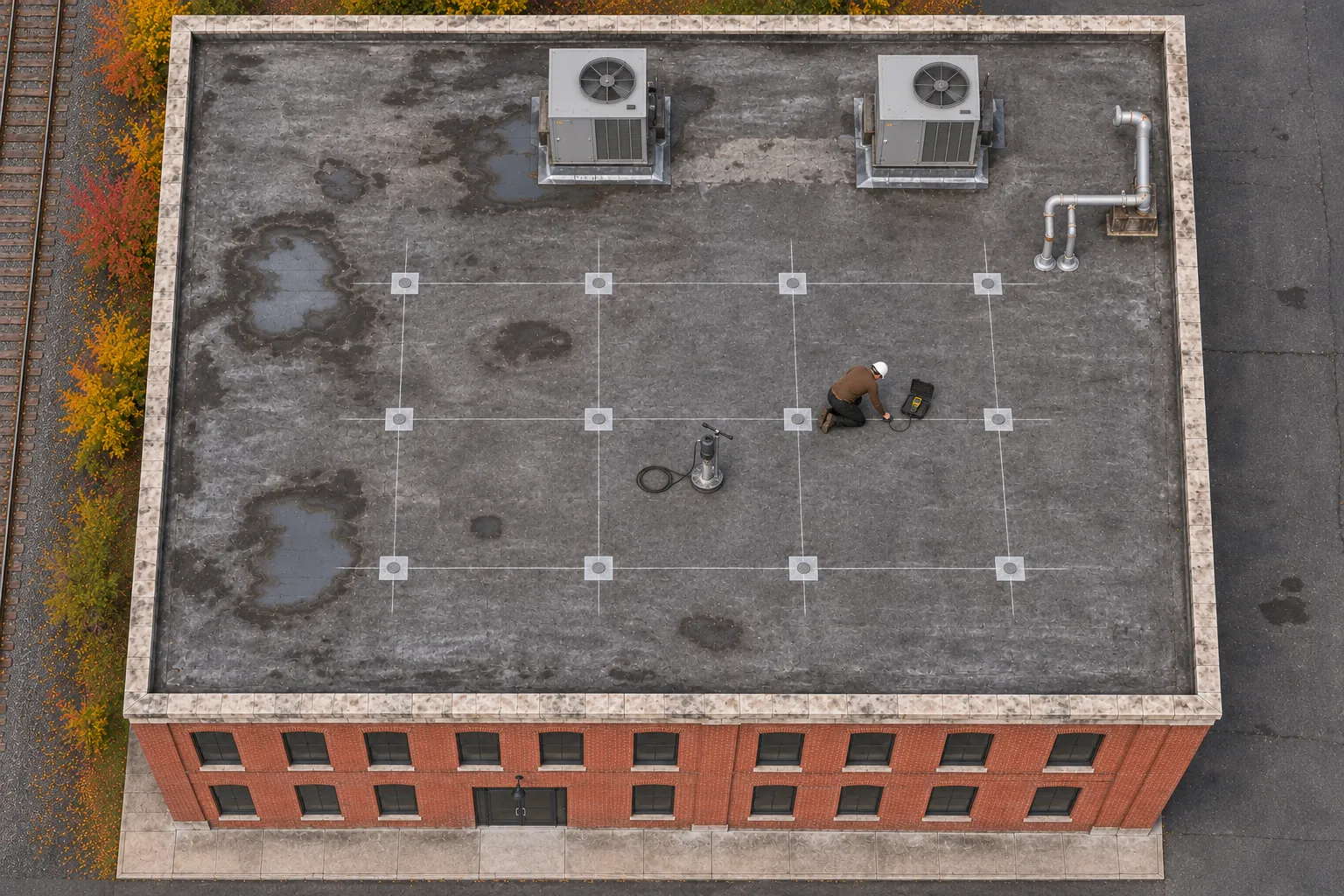
Reading flat roof repair works best while damage stays local. Compare what the roof shows with these three paths.
These are the flat roof conditions we find most often once the ladder goes up.
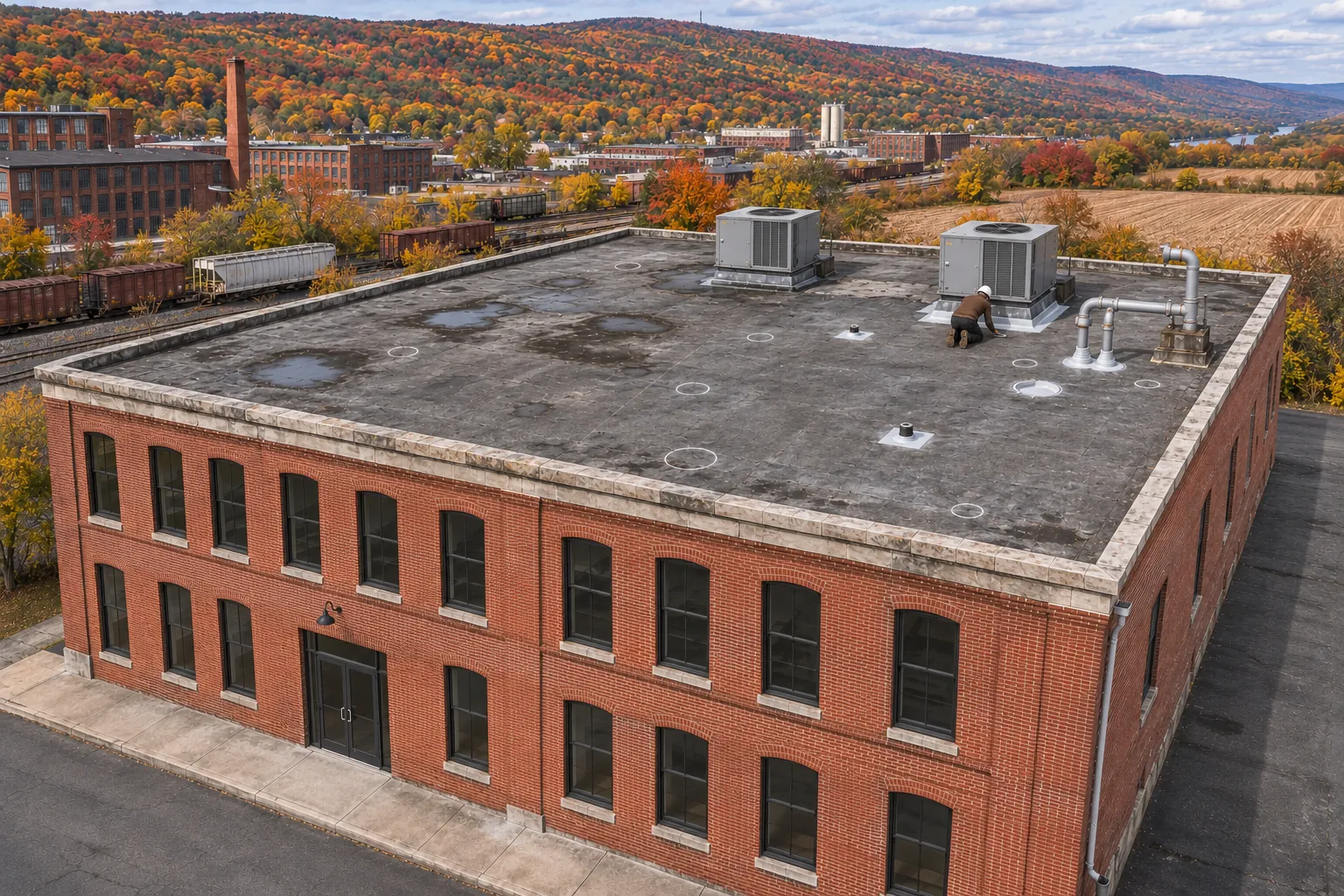
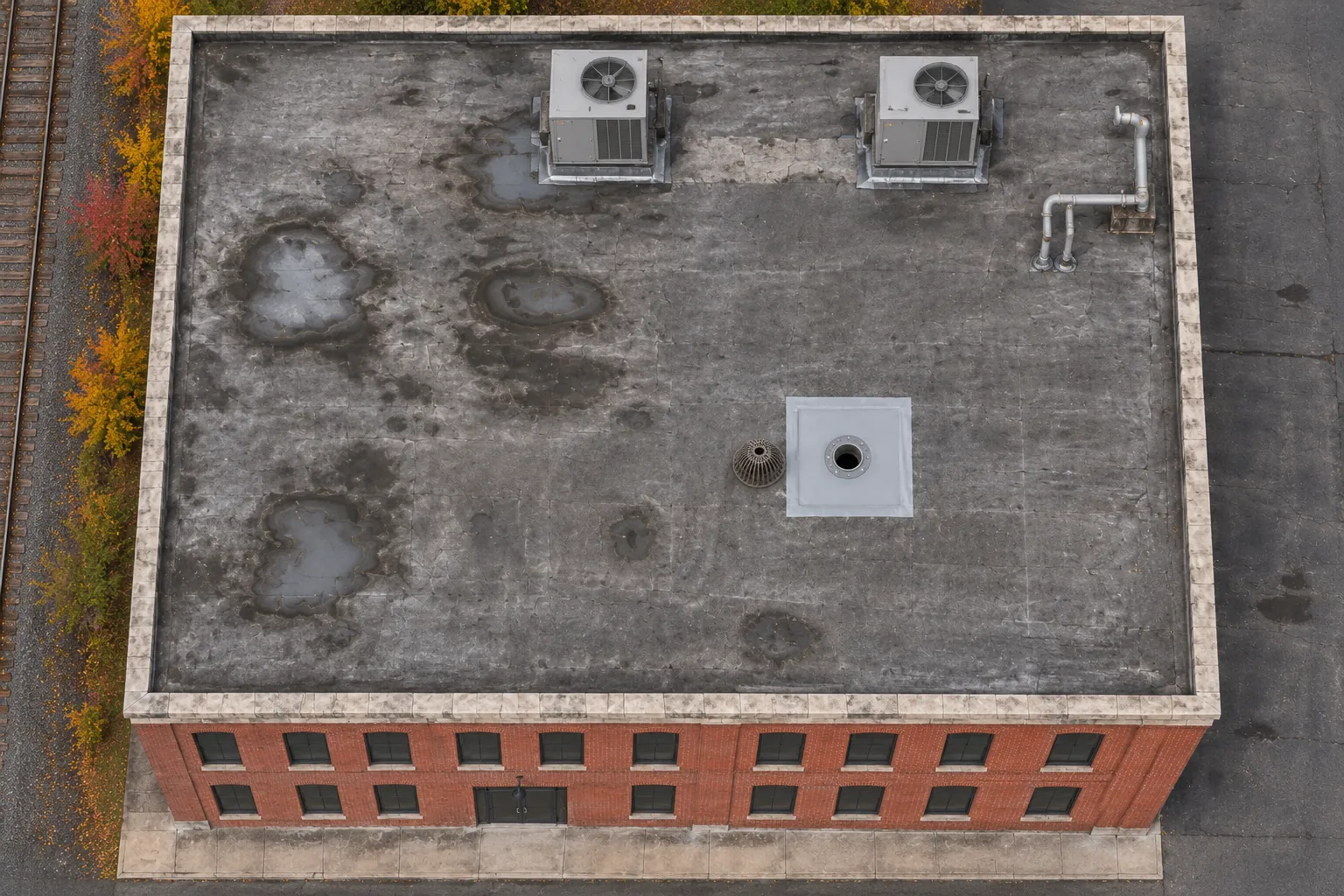
The same puddle back after every storm, ringed with silt.
A blocked outlet, a high drain, crushed insulation, or a sagging deck keeps it there. The drainage cause gets fixed along with the worn membrane.
A stain under the drain, or water around the bowl after rain.
The bowl, its clamping ring, the membrane joint, or the pipe below can each leak. Tracing comes before any new flashing goes on.
A lifted edge you can slip a fingertip under.
Cold-weather movement and age loosen laps. Matching membrane is welded or adhered past the opening onto firm material.
Small holes and scuffs along the path to the HVAC.
Service traffic and dropped tools punch through. An isolated hole takes a patch when the board below stays dry.
Raised bubbles or a spongy feel underfoot.
Water or air trapped under the membrane lifts it. Cores show whether the area needs a cut repair or new insulation.
The repair method follows the membrane type and what the cores turn up.
Thermoplastic roofs get hot-air welded patches; rubber and built-up roofs get compatible adhered or set-in-place materials, cleaned and primed first.
New flashing sheets go under a reset clamping ring, with strainers cleared and the pipe below checked by the right trade.
Isolated damage gets a patch sized well past the hole, rounded at the corners, on a dry and clean surface.
Wet board is removed back to dry edges, new insulation goes in, and new membrane is seamed to the existing roof.
Crickets, tapered insulation, or outlet changes move standing water toward a drain once the cause is known.
A targeted fix keeps a low-slope roof doing its job without paying for roof you still have.
Closing a seam or puncture before water spreads keeps the board around it dry, which keeps the repair to one small area.
A reset ring and new flashing stop leaks at the bowl, and cleared strainers let storm water leave the roof on time.
Fixing the cause of a recurring puddle ends the cycle of silt, algae, and softened membrane around that low spot.
Cores and a close look at the membrane show whether patching still makes sense or a section has reached the end.
Send a photo of the low spot and the nearest drain. Standing water that lingers is worth a look before it softens the membrane.
Five steps, from the first look at the drains to a closed-up repair.
Strainers, bowls, and outlets are cleared and checked first, since a slow drain explains many flat roof leaks and puddles.
Seams, patches, and punctures along the water path are probed and marked, starting near the ceiling stain and working outward.
Small cores show whether insulation is wet. Dry board means a patch; wet board means cutting back to dry edges.
Welded, adhered, or set-in-place materials match the existing membrane, and every new seam is probed after it cools or cures.
The repair, the drains, and any low spots left to watch are photographed and marked for your records.
Flat roofs share buildings with metal sections, rooftop units, and plant equipment.
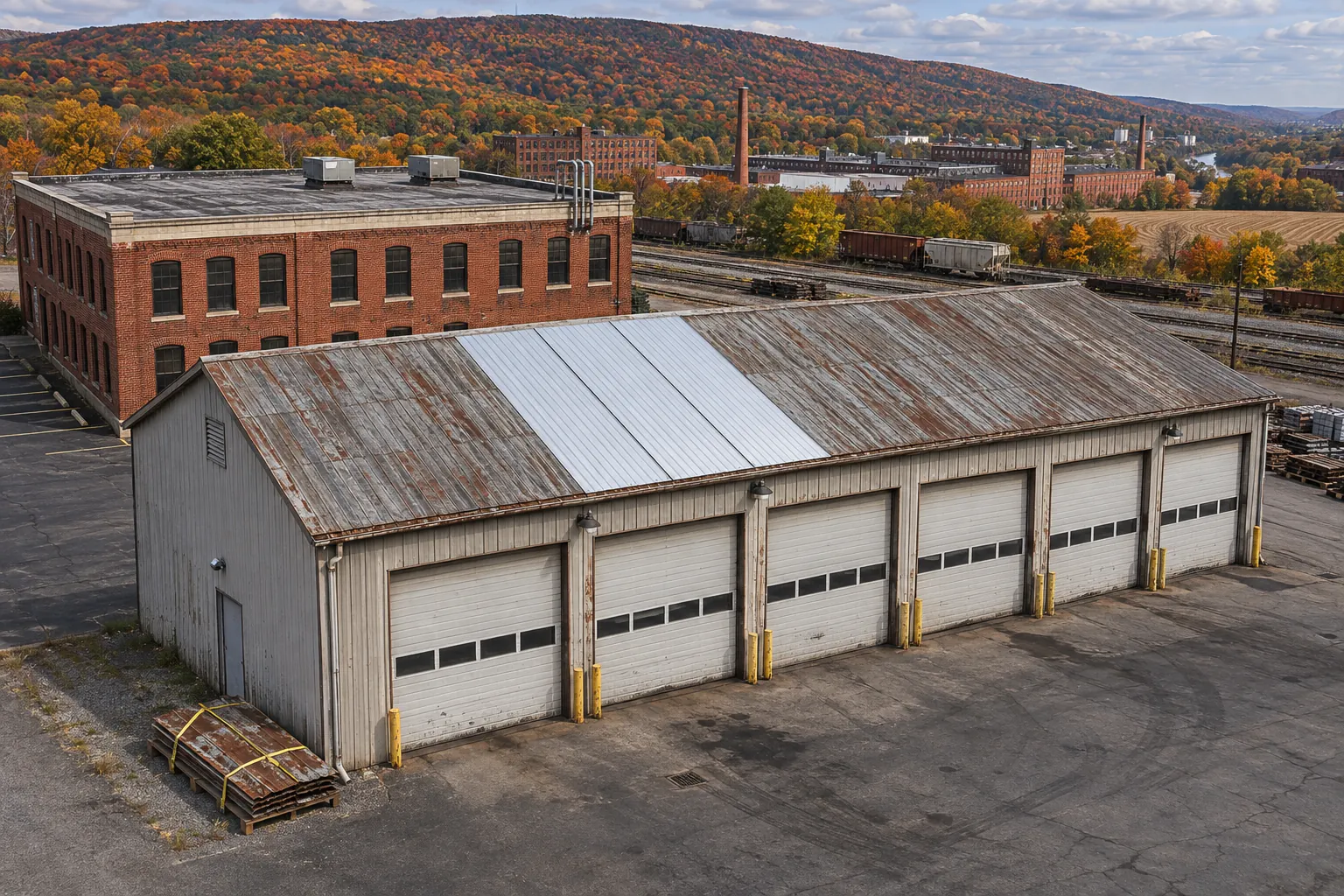
Many Reading buildings mix a flat main roof with metal additions, and leaks often start where the two meet at a lap or curb.
When a flat roof leak keeps moving or the source hides above racks, a full leak trace comes before the membrane repair.
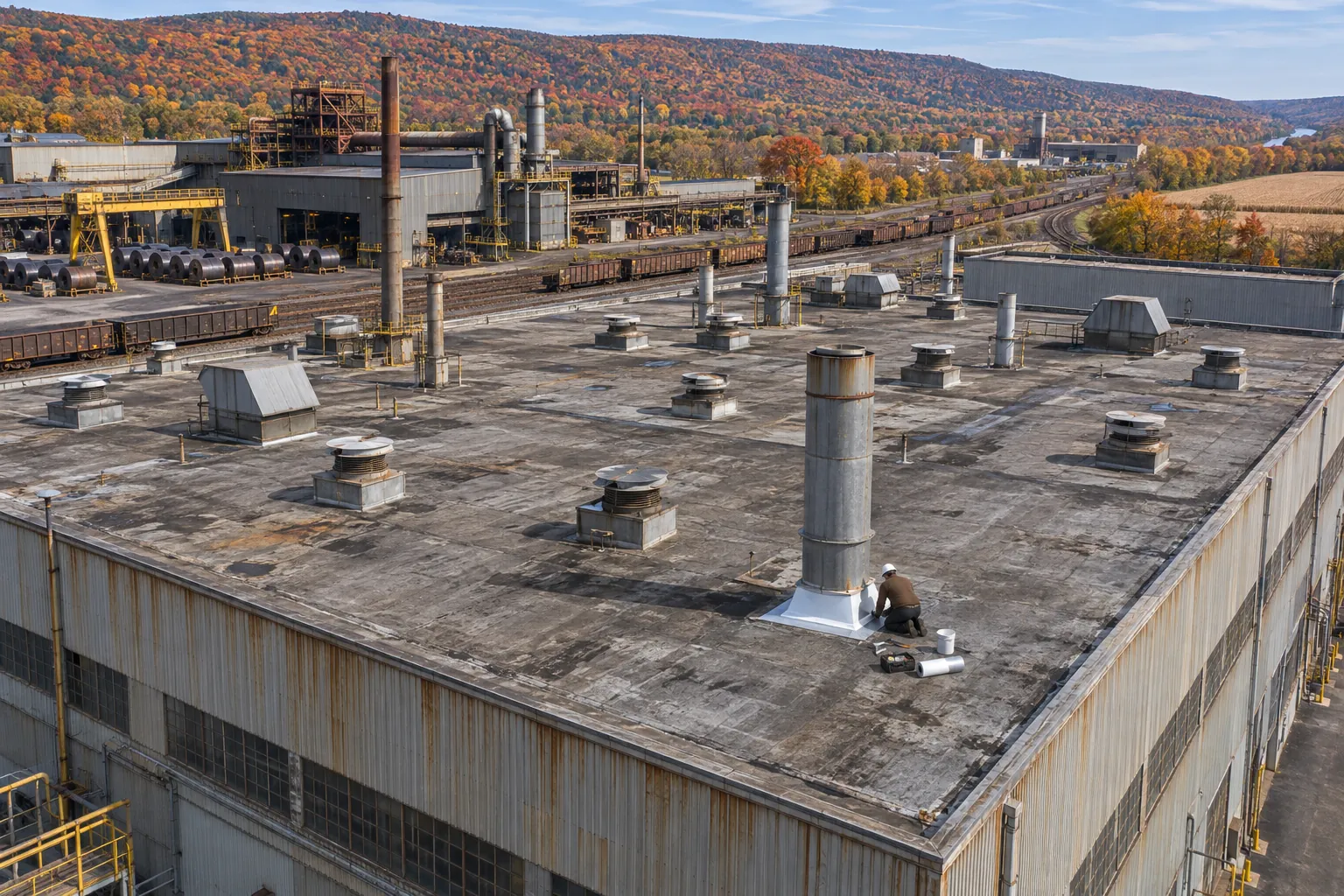
Flat plant roofs carry fans and stacks whose flashing and residue need their own repair plan alongside the membrane work.
Answers owners ask for most before a flat roof repair starts.
The price comes from the roof itself: membrane type, the size and number of damaged areas, cores for wet insulation, drain and flashing work, and access. Whether a local patch holds or a section needs replacing is the biggest swing.
A patch fits isolated damage on firm, dry membrane. Replacement of a section, or the roof, fits when cores find wet board across a wide area or the membrane is splitting in many places.
Standing water returns when its cause stays in place: a clogged outlet, a drain set too high, crushed insulation, or a sagging deck. Fixing that cause, then the worn membrane in the low area, ends the cycle.
Many flat roof repairs can go ahead on dry, workable days. Some adhesives and coatings need warmer temperatures, so those details get a temporary seal and a return visit when conditions allow.
Often the flashing is fine. The clamping ring, the bowl, or the pipe below can be the problem, and work under the deck can need a plumber, especially over equipment or occupied rooms.
Tell us where the water shows and how long puddles last. We check the drains, trace the leak, and price the repair from the roof.