Equipment Stays Dry
Closing fastener and lap leaks keeps water off motors, panels, and controls inside the building. Motors, control panels, and switchgear stay out of the drip path during storms.
As a Downingtown commercial roof repair contractor, we fix loose screws, worn washers, and open laps on metal equipment buildings where machinery shakes the panels.
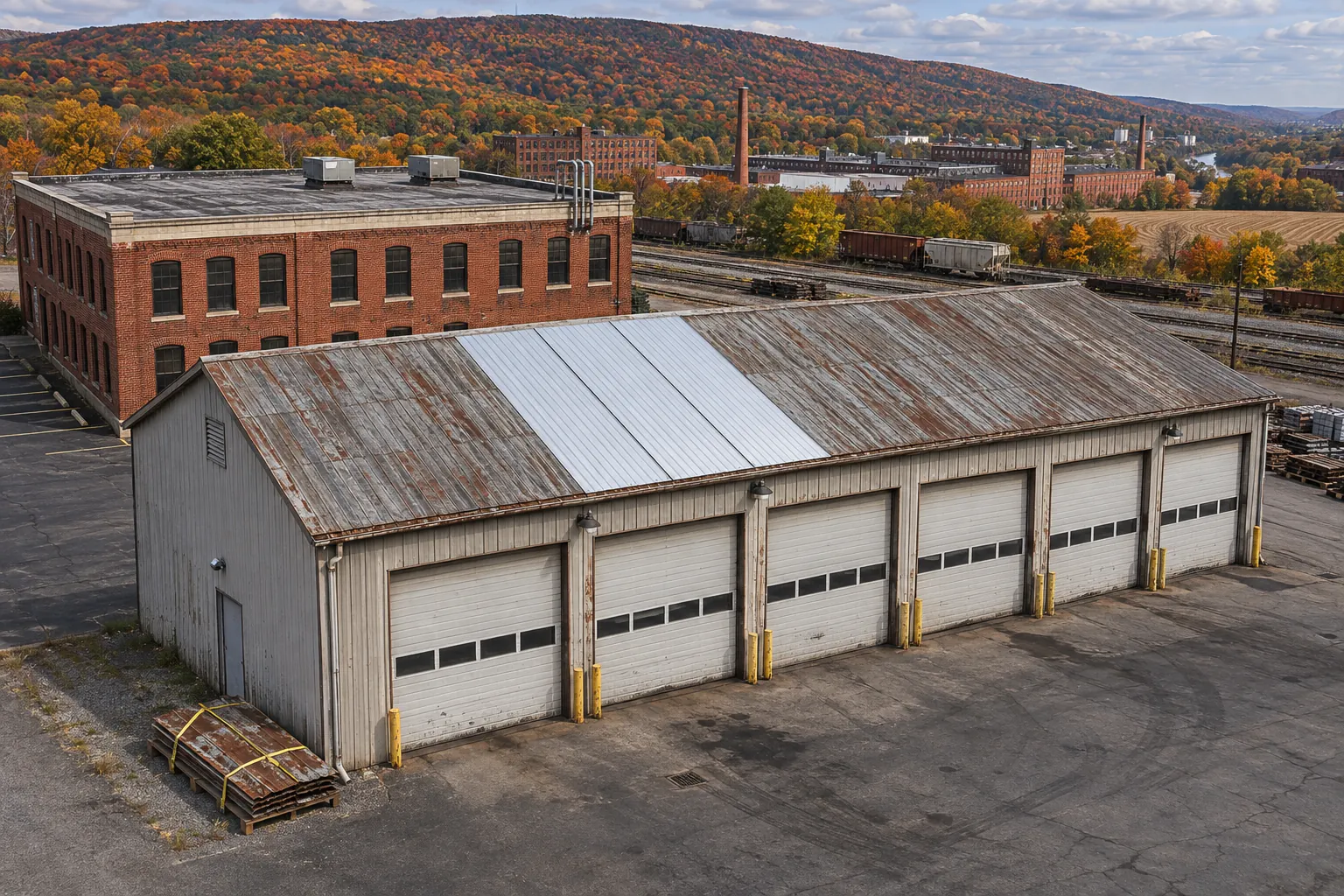
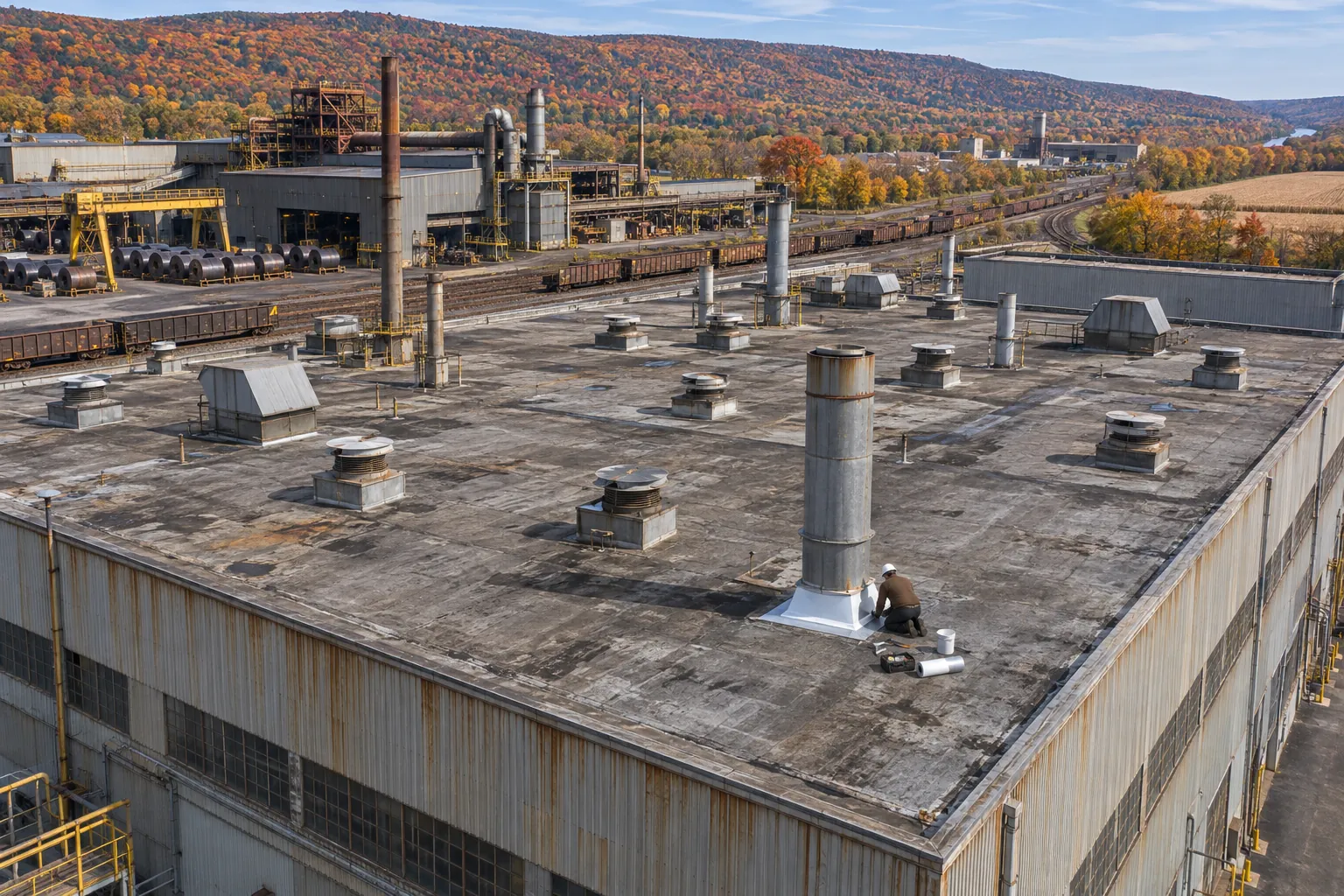
Downingtown commercial roof repair on equipment buildings starts at the fasteners, because vibration loosens them long before panels wear out.
Compressors, generators, and process machinery send vibration up through the frame. Over time screws back out, washers dry and split, and water runs down the shank into the building.
Each suspect fixing gets checked for grip, washer condition, and the metal around the hole. Nearby laps and flashing get the same look, since one leak often has two sources.
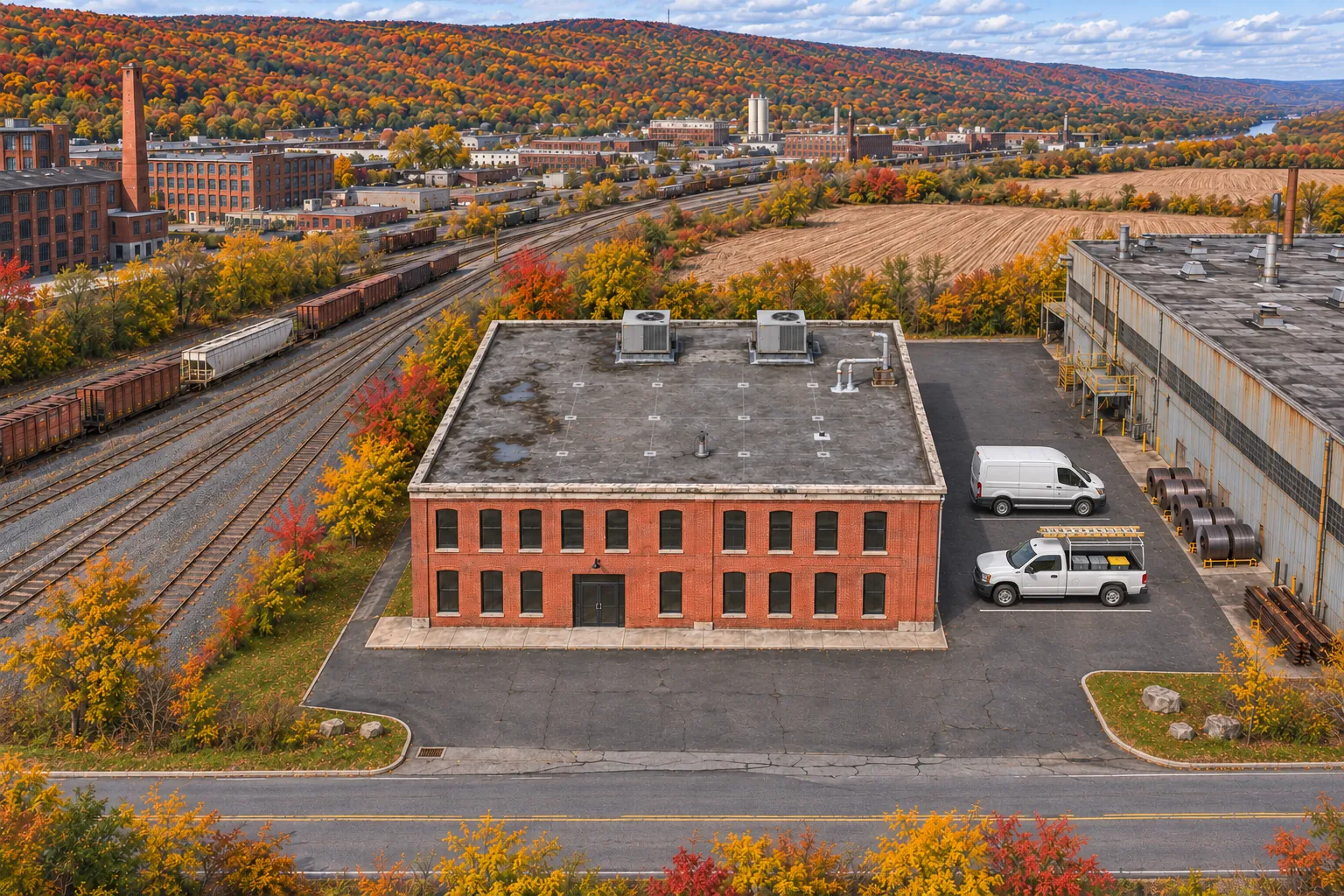
Metal equipment buildings show these conditions first.
Screw heads raised above the panel along the roof over the equipment.
Movement loosens the grip. Larger fasteners or backing restore attachment before any seal goes on.
Washers split, flattened, or missing under screw heads.
Without a good washer, a tight screw still leaks. New washers with properly seated fasteners close the hole.
Daylight at side laps above compressors or generators.
Shaking works laps apart. Stitching and flexible sealant hold them while the building moves.
Rust or water stains at the base of exhaust pipes through the roof.
Heat and vibration crack boots and collars. New flashing shaped to the rib profile closes them.
Orange halos around fasteners on otherwise solid panels.
Water sitting in loose fastener holes starts rust there first. Treating the ring and reseating the screw stops it from spreading into the panel.
Trim at the eave rattling or bent above overhead doors.
Wind pressure at large door openings works trim and closures loose. Re-fastening the trim and replacing closures keeps blowing rain out of the panel ends.
Restoring attachment protects the machines the building exists to shelter.
Closing fastener and lap leaks keeps water off motors, panels, and controls inside the building. Motors, control panels, and switchgear stay out of the drip path during storms.
Fasteners that grip again keep panels from working loose and tearing at the holes. Clamped panels also stop the slow tearing that turns a screw hole into a slot.
Tight screws and good washers stop water sitting in fastener holes, where rust starts on metal roofs. Fewer wet holes means fewer rusted panels to replace in the years ahead.
Flexible lap seals and secure stitching suit a building that never stops shaking slightly. Stitched laps stay closed through daily vibration instead of working open again.
Attachment first, sealing second, on every fixing point.
Stripped holes take larger or longer screws, or backing where the support needs it.
New sealing washers go under every reused or replaced screw near the leak.
Side laps near machinery are stitched and sealed with materials that flex with the panels.
Boots and collars rated for the heat go on at exhausts and vents.
Perforated panels above equipment are replaced with matching profile panels, lapped into firm neighbors and fully fastened.
Shut off and cover what you safely can, then call. We check the fasteners and laps directly above the machines.
Four steps focused on the fixing points.
Which equipment runs where, and when, tells us which roof areas take the most vibration.
Screws near the leak and over the machines are checked for grip, washer condition, and the metal around them.
Fasteners are upsized or backed, washers replaced, laps stitched, and flashing renewed where cracked.
Repaired points go onto a roof sketch with photos for quick checks later.
Loose equipment mounts, unbalanced fans, or rubbing pipes are pointed out to the owner, since they will loosen new fasteners too.
Equipment buildings, offices, and warehouses in these towns and Reading are on our list. Somewhere else? Call us or send us a message.
Office roofs where parapets and masonry share the blame.
Warehouse repairs that keep the dry roof in place.
Drain leaks checked above the deck and below it.
Small facilities that log storms to confirm a roof fix.
Questions from owners of metal equipment buildings.
Loose fasteners let water in and let panels move more. Checking screw grip, washers, and the metal around each fixing, plus nearby laps and flashing, finds every source of the same leak.
How many fixing points need work, panel swaps for any perforated metal, lap and flashing repairs, and access around equipment. The count comes from testing each suspect screw.
Downingtown is on our regular service list. Call us with the address and which machines sit under the drips.
We repair metal and flat commercial roofs in Downingtown and nearby towns, starting with a check of every fixing point along the leak path.
Most repairs happen with machines running below. Work directly over hot exhaust or at a vibrating curb is timed with a short stop.
Once a year is a good habit, plus after any new equipment is installed. A quick walk along the screw lines over the machines catches backed-out fasteners before they leak.
Usually. Panels come off and go back on from the roof side, with covers protecting the machines below. Large items directly under the work get a planned stop while the panel is open.
Usually, when the panels and supports around the leaks are still solid. Upsized fasteners, new washers, and a few panel swaps keep the roof working; panels thin with rust across most runs point to a retrofit instead.
Tell us where drips land and what machines run below. We test the fasteners, reseal the laps, and record each fix.