Where Most Metal Roofs Start
Fastener and Lap Repair
- Panel Metal
- Surface rust, solid steel
- Fixing Points
- Holes still take a larger screw
- Laps and Seams
- Open in places, panels firm
- Repair Scope
- New fasteners, washers, lap seal

As a Reading commercial metal roof repair contractor, we fix loose fasteners, open laps, rusted panels, and flashing on metal roofs over shops, garages, and plants.
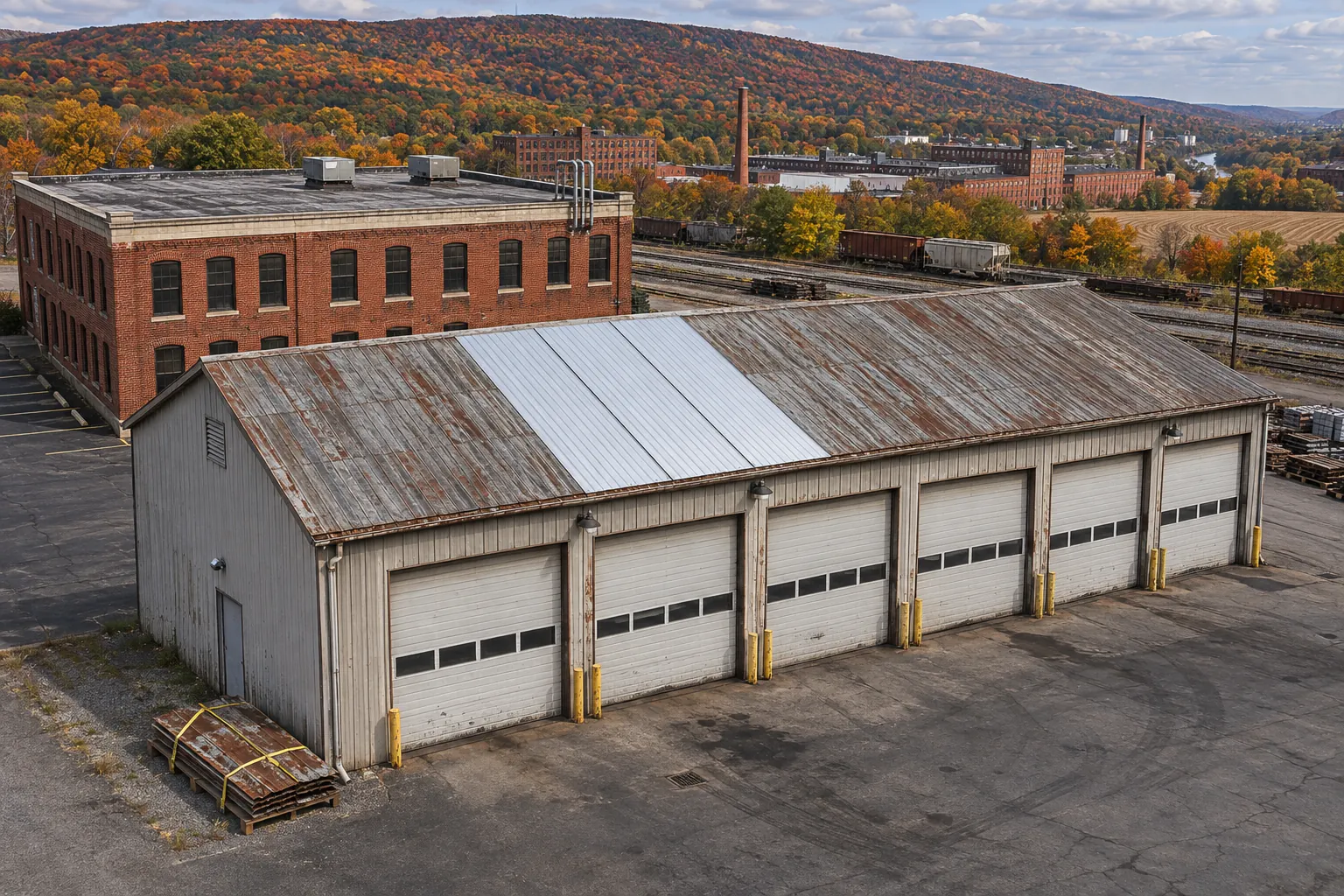
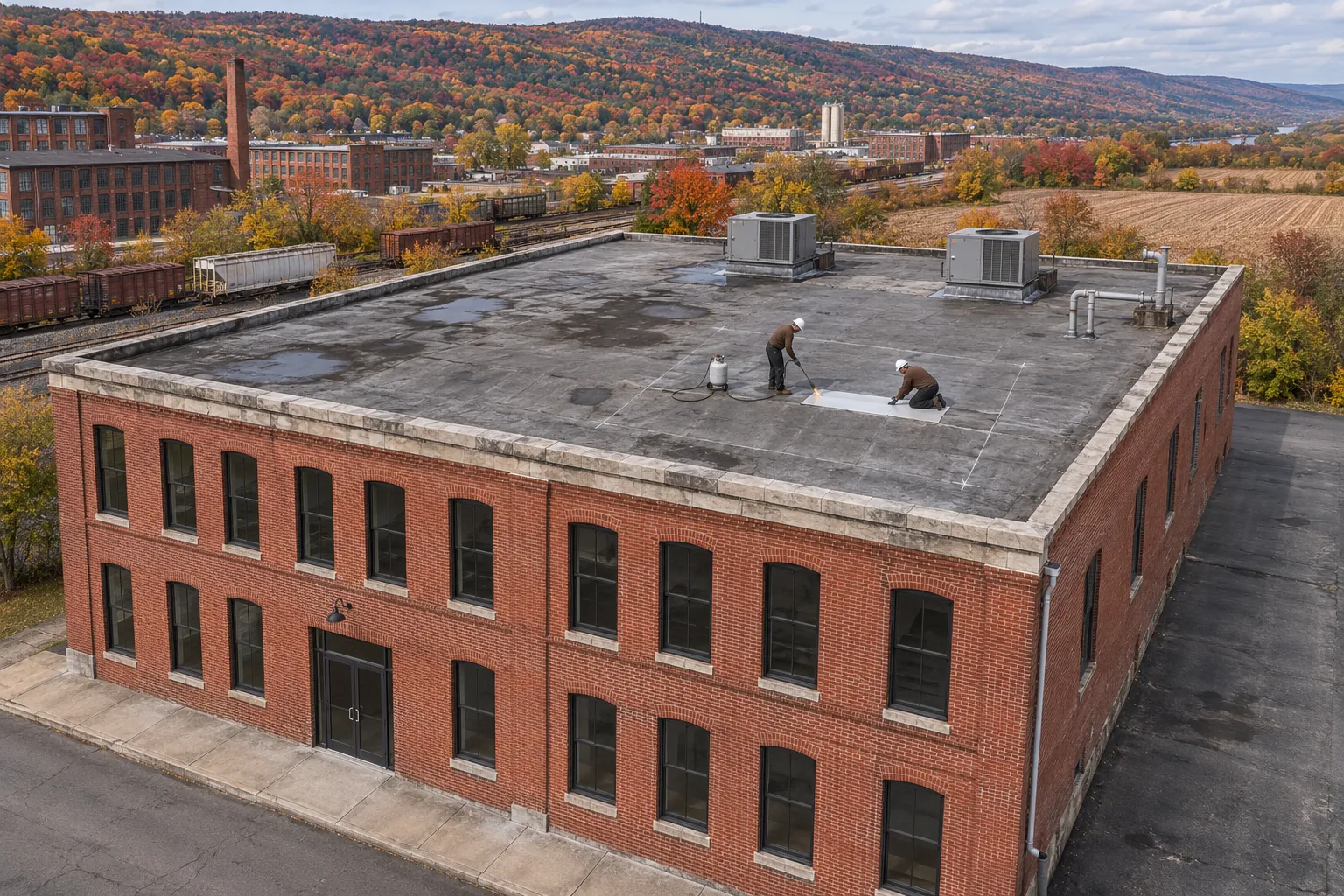
Reading commercial metal roof repair depends on the steel left around each fixing point. These three paths cover most metal roofs.
Metal roofs fail at the points where pieces join. These are the ones we repair most.
Rust streaks below screw heads and drips along a purlin line.
A stretched hole needs a larger fastener, a new washer, or metal behind it. Sealant smeared over a moving screw lasts one season.
Light showing through a side lap, or water along a panel edge.
Heat and cold move panels every day. The lap needs secure stitching and a flexible seal that suits that movement.
Flaking rust and pinholes, worst at the bottom of each panel run.
When metal loss or perforation reaches the fixing points, new panels go in and the neighboring laps get checked too.
Trim lifting or rattling at the eave or ridge after a storm.
Loose trim lets wind-driven rain past the panel ends. Re-fastening and new closures seal those openings again.
A stain directly below a vent stack or roof curb.
Flashing around penetrations cracks as the roof moves. A new boot or curb flashing matched to the rib profile closes it.
Each method restores attachment first and weather sealing second.
Loose screws come out; the hole and support are checked, then larger or longer fasteners with new washers go in.
Side and end laps are cleaned, re-stitched, and sealed with materials that flex with the panel.
Rusted or perforated panels are removed and replaced with matching profile panels lapped into firm neighbors.
Surface rust on solid steel is cleaned and primed where it sits next to a repair, so corrosion stops spreading under new work.
Pipe boots, curb flashing, and edge trim are rebuilt with closures shaped to the rib profile.
Restoring attachment keeps a metal roof working long after a patch would have failed.
Upsized fasteners and new washers clamp the panel tight, so water stops running down the shank into the building.
Stitching and flexible sealant let panels expand and contract while the lap stays closed.
Replacing perforated panels and treating rust beside them stops corrosion from spreading to the next run.
A close look at panels, supports, and fixing points shows whether repairs extend the roof or a retrofit is due.
Count how many you can see from the ground and note where drips land. We check every fixing point near the leak.
Five steps that put attachment ahead of sealant.
Every lap, trim piece, and penetration along the likely water path is checked, with loose and missing fasteners marked as we go.
Suspect screws are turned to see whether they still hold. Stripped holes get a note on the size of fastener or backing they need.
Where reachable, the underside shows rust at overlaps and the condition of purlins that the new fasteners will grip.
New fasteners, stitching, panels, or flashing go in first. Compatible sealant finishes each connection.
Repaired points are photographed and marked on a roof sketch, which makes later checks quick.
Metal roofs often sit beside flat sections and equipment that need their own fixes.
Low-slope sections next to metal panels pond and split at seams, and the joint between the two roofs leaks often.
If drips move around under a metal roof, condensation, wind-driven rain, and the panels themselves all get traced before repair.
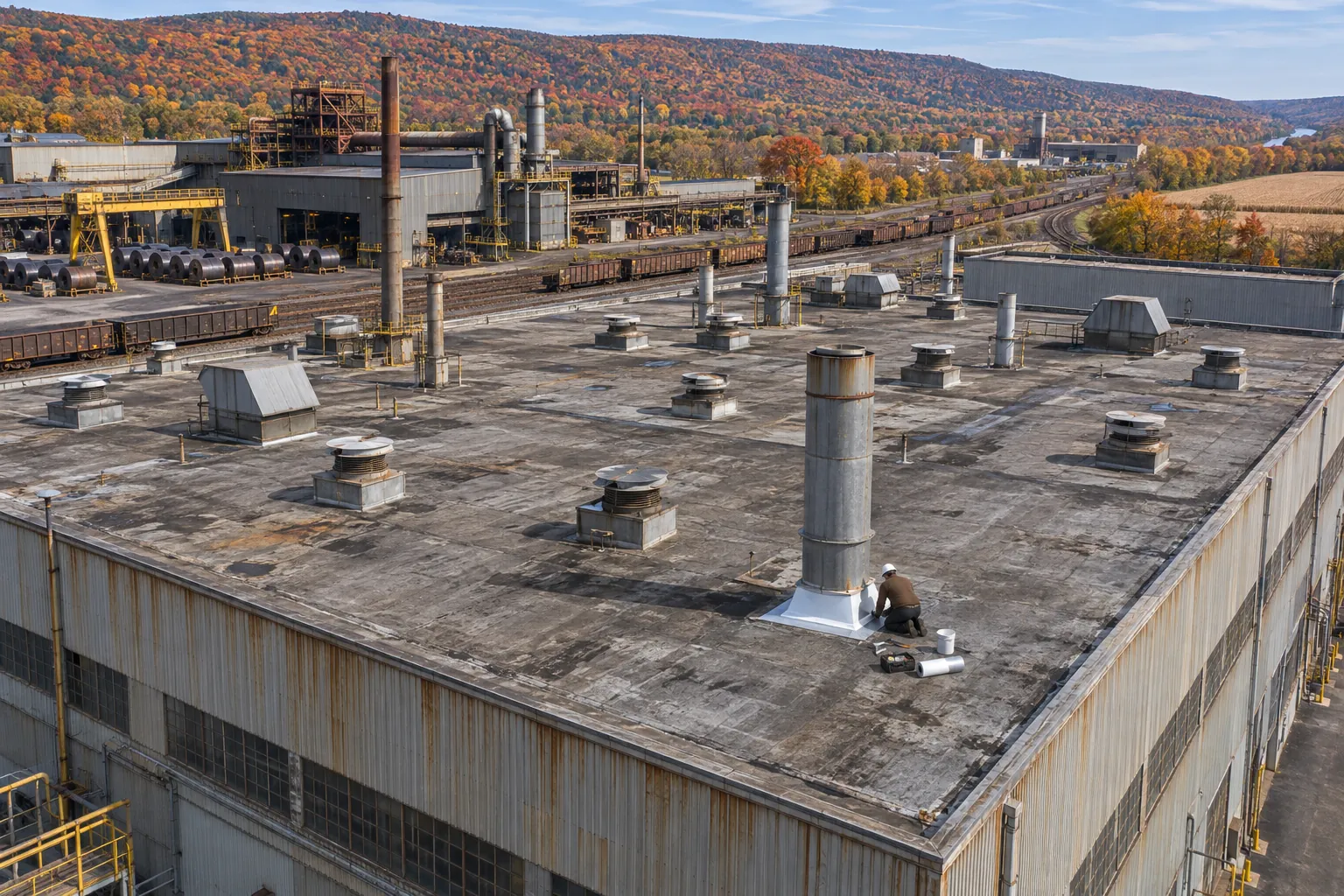
Metal plant roofs with fans and stacks need curb and vibration work beyond the panel repairs themselves.
What owners ask before a metal roof repair is scheduled.
Most can be repaired when the panels, supports, and connections near the damage are serviceable. Corrosion through the panels, failing supports, or leaks along most runs point toward a retrofit or reroof.
Sealant over a spinning screw buys a few months at best. The hole needs a larger fastener, a new washer, or backing, and the seal goes on after the panel is clamped tight again.
Panel movement, poor engagement, or loose stitching was left in place. The repair has to suit daily expansion; a rigid patch or a thick bead of sealant cracks as the panels move.
Enough to reach firm metal. Rust often runs under overlaps, so the neighboring laps and supports are checked, and new panels never land against another rusted connection.
Yes. Warm, humid air meeting cold panels can drip on cold mornings with no rain at all. Comparing drips with weather and building use separates condensation from a true leak.
Send a few photos of the panels and where the water lands. We test the fasteners, check the laps, and write up the repair.