One Fix at the Real Source
Separating wall leaks from roof leaks puts the repair where water enters, so the same stain stops coming back. Photos of the parapet, the flashing, and the stain area are kept together for comparison.

As a Wyomissing commercial roof repair contractor, we trace office ceiling stains to the roof membrane, parapet flashing, or masonry above, then repair that source.
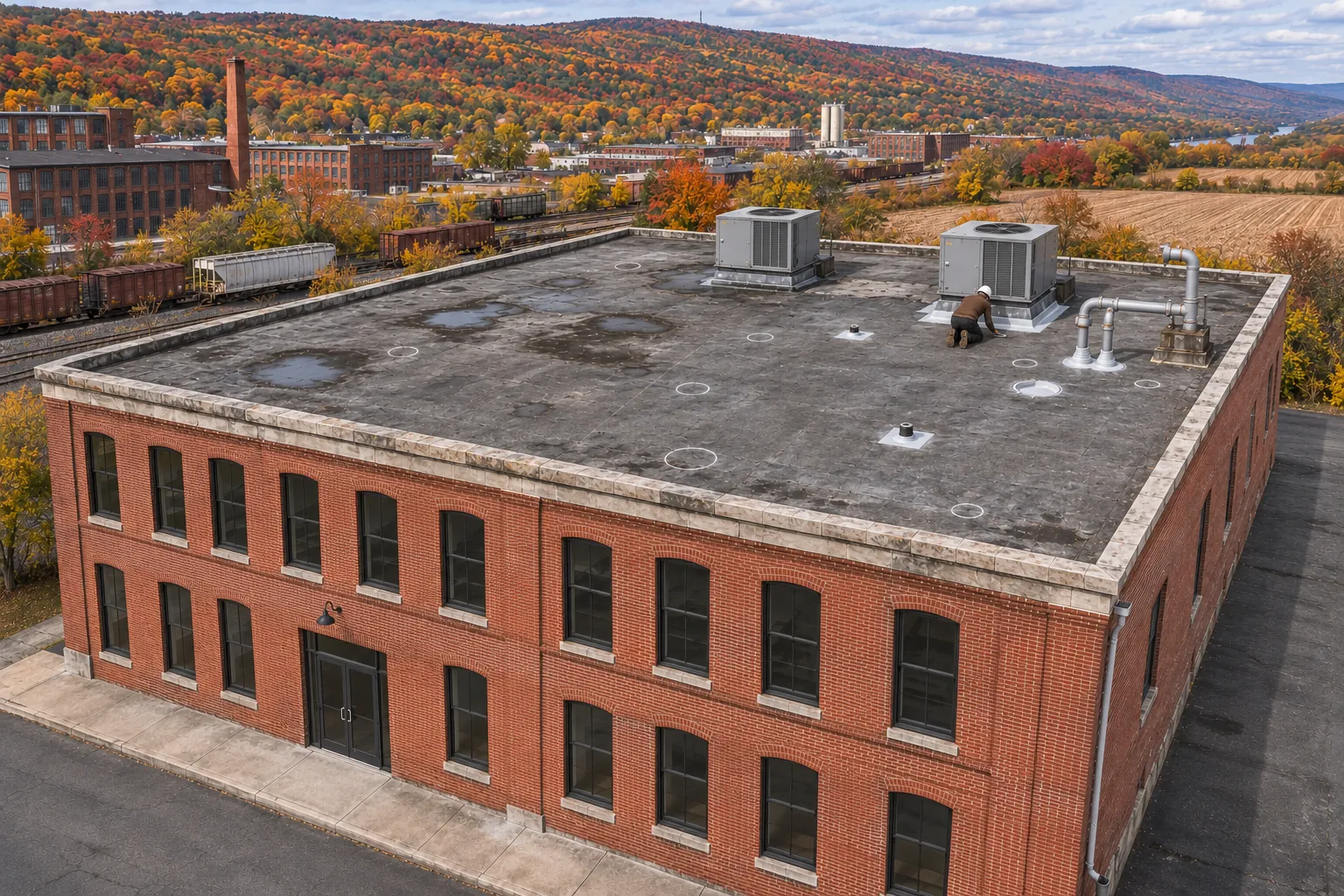

Most Wyomissing commercial roof repair calls we get come from offices where the stain shows up near an outside wall.
That location matters. Water entering through a parapet cap, wall flashing, or a mortar joint runs down inside the wall and appears at ceiling level, looking exactly like a roof leak.
So the trace covers both: the membrane and its seams near the wall, and the parapet flashing and masonry above the roof line. Patching the flat roof alone leaves a wall source untouched.
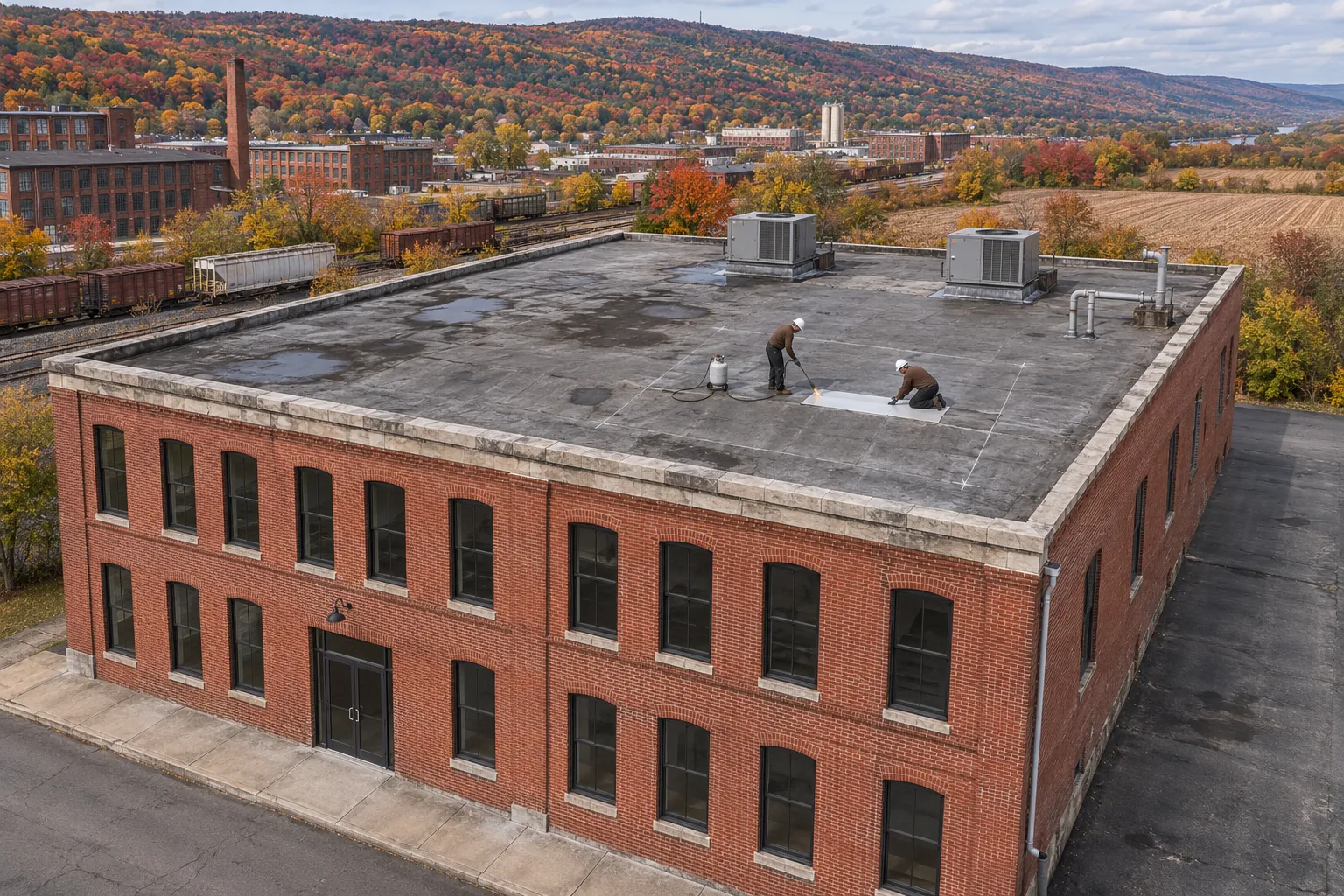
These are the conditions that bring Wyomissing office managers to us.
A brown line on ceiling tile near the windows, worst after blowing rain.
Parapet caps and wall flashing let water into the wall during sideways rain. The roof membrane next to the wall gets checked too.
Dark, wet patches on the brick above the roof surface.
Open mortar joints soak up rain and feed it down behind the flashing. That needs wall repair alongside any roof work.
Water on desks or carpet below the HVAC curb.
Curb flashing, the unit housing, or a condensate line can leak. Roofing and HVAC checks run together.
A lifted lap where the membrane turns up the wall.
The wall base moves differently from the roof. Base flashing gets resealed or replaced where it pulled loose.
Water spilling over the parapet scupper or staining the wall below it.
A blocked scupper backs water up against the base flashing. Clearing the outlet and resealing its collar keeps water moving off the roof.
Getting the source right keeps an office open and dry.
Separating wall leaks from roof leaks puts the repair where water enters, so the same stain stops coming back. Photos of the parapet, the flashing, and the stain area are kept together for comparison.
Repairs are scheduled around tenant hours, with quiet work first and roof access kept away from entrances. Roof hatches and ladders are chosen so crews never pass through a busy lobby.
Once the source is closed, stained tile and wet insulation above it can be replaced once instead of every spring. New tile goes up only after cores show the board above is dry.
Photos show whether the repair was roofing, flashing, or masonry, which helps with lease and budget questions. That record also shows which trade to call if the stain ever returns.
The method depends on whether the trace ends at the roof or the wall.
Loose caps are re-secured, failed joints resealed, and counterflashing set back tight against the wall.
Membrane turned up the wall is replaced where it pulled away, lapped onto firm roof membrane.
Open mortar joints go to the masonry trade, timed with the roof work so both repairs close together.
Curb flashing at rooftop units is rebuilt, with condensate lines checked by the HVAC tech.
Scupper collars are resealed into the parapet and collector boxes re-fastened so overflow stops running down the brick.
Call and tell us which wall and which storms. Wind direction helps tell a wall leak from a roof leak.
Four steps built around occupied offices.
Arrival, roof access, and any noisy work are set around office hours and agreed with the property manager.
Stains are compared with seams, base flashing, parapet caps, and the masonry above, side by side.
Roof and flashing repairs go in; masonry work is coordinated with the wall trade when the trace points there.
Photos mark each repair, and the stain area is checked again after the next wind-driven storm.
The scope says which repairs were roofing, which were flashing, and which belong to the masonry trade, with photos of each.
Besides Wyomissing, we repair commercial roofs in the towns below and in Reading. Building elsewhere? Call us or send us a message.
Warehouse repairs that keep the dry roof in place.
Metal equipment buildings with loose screws and open laps.
Drain leaks checked above the deck and below it.
Small facilities that log storms to confirm a roof fix.
Questions from office owners and property managers.
It depends on the trace. Water entering a wall can show at ceiling level, so stains get compared with parapet flashing, the masonry above, and the membrane. Repairing only the flat roof would leave a wall source in place.
The roof system, how many areas are damaged, cores for wet insulation, flashing at parapets and curbs, and access. A wall source that needs masonry work is a separate line coordinated with that trade.
Wyomissing is on our regular service list. Call us with the address and where the stain shows, and the first visit gets planned around your office hours.
Yes. Roof work stays above, with access routes away from entrances. Noisy steps and anything that needs ceiling access below are set for quieter hours with the manager.
Often the patch went on the roof while water was entering the wall. A fresh trace covering parapet caps, counterflashing, and mortar joints finds the source the patch missed.
Timing and direction help most. Stains that follow wind-driven rain from one side point to the wall, while leaks in calm, heavy rain point to the roof. Probing base flashing and checking the masonry above confirms which one.
Caps, counterflashing, and base flashing are roofing work. Repointing mortar joints or rebuilding brick belongs to a mason, and we time both so the wall and the roof close up together.
Tell us which wall the stain runs along and when it shows. We trace the roof and the parapet, then fix the source.